Unpacking Pattern Recognition Methods for Enhancing Choices in Virtual Table Game Environments Across Digital Platforms
Nils Schulz · Jun 1, 2026

Unpacking Pattern Recognition Methods for Enhancing Choices in Virtual Table Game Environments Across Digital Platforms
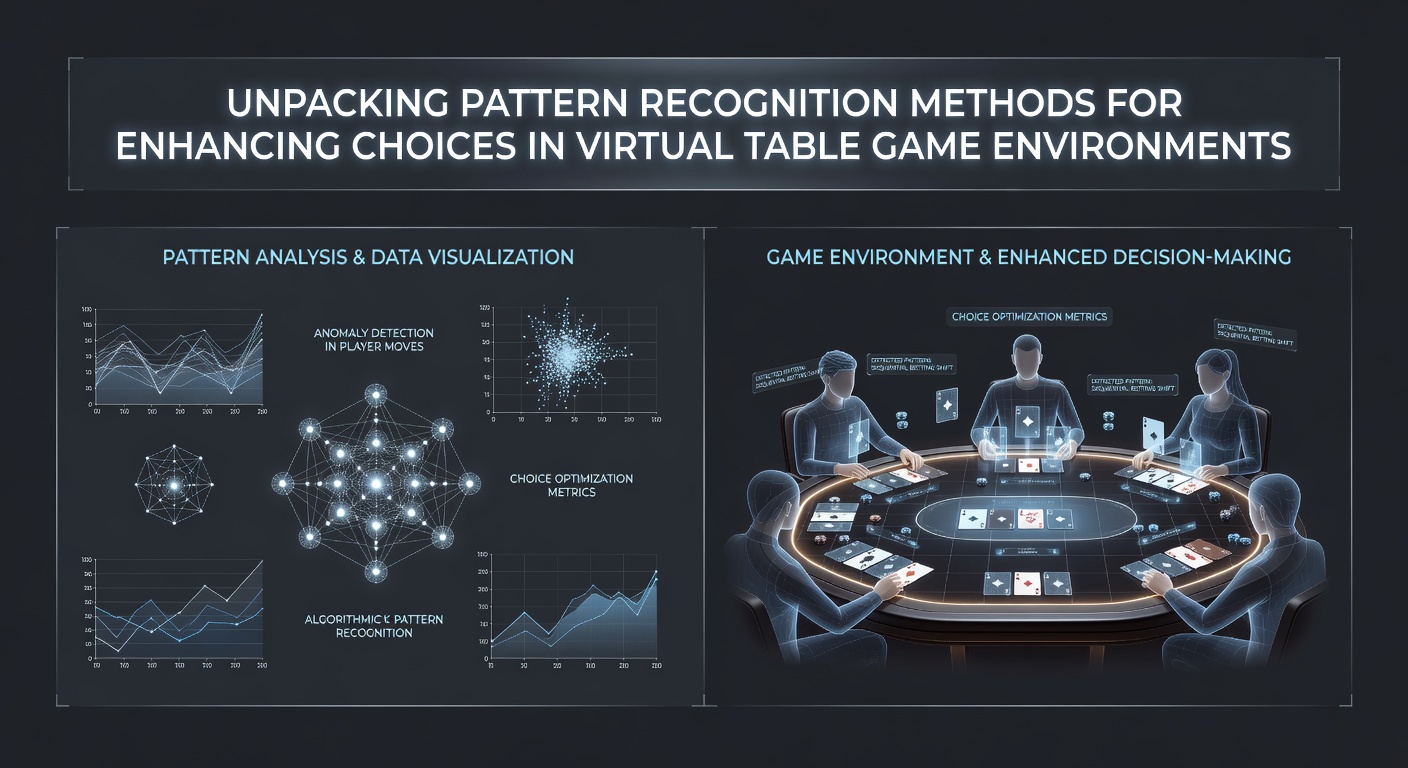
Pattern recognition methods have become central to decision-making processes in virtual table game environments, where algorithms analyze sequences of card distributions, player actions, and outcome probabilities across platforms such as desktop applications, mobile apps, and virtual reality interfaces. These techniques draw from statistical modeling and machine learning frameworks to identify recurring structures in data streams generated during gameplay, allowing participants to refine selections based on observed trends rather than isolated events. Data from industry reports in early 2026 shows increased adoption of such systems on major digital platforms, particularly as operators integrate real-time analytics tools into titles like blackjack, poker variants, and baccarat.
Core Techniques in Pattern Detection
Statistical pattern recognition relies on probability distributions and historical datasets to flag deviations from expected norms, whereas machine learning approaches such as neural networks and clustering algorithms process larger volumes of input variables including bet sizes, timing intervals, and multi-hand outcomes. Researchers at academic institutions have documented how decision tree models break down complex game states into branching paths that highlight advantageous moves, while support vector machines separate winning configurations from neutral ones in high-dimensional spaces. In June 2026, updates to several European digital platforms incorporated hybrid models combining these elements, resulting in measurable shifts in how users approach repeated sessions on the same software.
Behavioral pattern analysis extends beyond card mechanics to track opponent tendencies in multiplayer formats, where software logs aggregate data on folding frequencies, raise patterns, and response latencies. Observers note that platforms employing these methods often display summarized insights to users through dashboards, presenting aggregated statistics without revealing proprietary code. One study from a Canadian research consortium examined datasets spanning thousands of virtual poker hands and identified clusters of play styles that correlated with long-term performance metrics across mobile and browser-based environments.
Platform-Specific Implementations
Desktop environments typically support deeper computational analysis due to higher processing power, enabling real-time simulation of thousands of possible future hands based on recognized patterns. Mobile applications, by contrast, optimize lighter algorithms that run efficiently on device hardware while syncing with cloud servers for periodic model updates. Virtual reality platforms introduce spatial data layers, where pattern recognition extends to avatar positioning and gesture sequences alongside traditional game variables. Figures from the American Gaming Association indicate that cross-platform synchronization tools grew by double digits through the first half of 2026, allowing consistent pattern libraries to transfer between device types without loss of continuity.
Integration with regulatory frameworks further shapes deployment, as operators must balance analytical capabilities with compliance requirements set by bodies such as state gaming commissions. In the United States, several jurisdictions updated reporting standards in 2026 to include disclosures on algorithmic transparency, prompting developers to document how pattern models influence displayed recommendations. Australian regulatory reviews around the same period examined similar systems for fairness metrics, confirming that recognized patterns did not alter underlying random number generators but instead informed user interfaces.
Data Sources and Validation Processes
Validation of pattern recognition outputs depends on cross-referencing live game logs against simulated benchmarks, a process that researchers describe as essential for maintaining reliability. Reports from the European Gaming and Betting Association detail how aggregated anonymized data from multiple operators feeds into periodic audits, revealing accuracy rates for pattern-based predictions in controlled test environments. Those who have examined these datasets observe that seasonal variations in player volume can influence the robustness of learned models, prompting periodic retraining cycles scheduled around peak activity periods such as major sporting events that drive traffic to integrated casino sections.
Case examples include implementations where pattern detection flagged common sequences in multi-deck blackjack shuffles, enabling users to adjust hit-or-stand thresholds accordingly. Another documented instance involved poker platforms that surfaced historical hand groupings to illustrate positional advantages, drawing from millions of recorded actions across global servers. These applications demonstrate how pattern methods translate raw telemetry into structured guidance without overriding the stochastic nature of each individual round.
Emerging Developments as of Mid-2026
By June 2026, several digital platforms had begun testing quantum-inspired optimization routines layered atop traditional pattern recognition to accelerate analysis of extensive historical archives. Industry organizations tracking these pilots report that processing speeds improved notably for complex table game variants, although widespread rollout remained limited to select operators pending further validation. Academic papers published in the preceding months explored transfer learning techniques, allowing models trained on one game type to adapt quickly to related variants with minimal additional data.
Cross-border data sharing agreements between platforms also expanded during this period, facilitating broader pattern libraries that account for regional differences in gameplay pacing and stake levels. Evidence from collaborative research initiatives shows these expanded datasets enhance detection of subtle correlations that single-platform logs might overlook, particularly in games blending elements of skill and chance.
Conclusion
Pattern recognition methods continue to evolve within virtual table game settings by leveraging expanding computational resources and refined algorithms that process diverse data streams across digital platforms. Their application centers on surfacing actionable structures from gameplay records, supported by ongoing validation from regulatory and research entities. As of mid-2026, these approaches maintain a documented presence in operator toolkits while adapting to new hardware formats and compliance landscapes, with primary emphasis on statistical integrity rather than outcome alteration.