Uncovering Hidden Correlations Between Player Fatigue Metrics and Live Table Game Decision Patterns in Digital Arenas
Jordan Hartmann · Aug 21, 2026
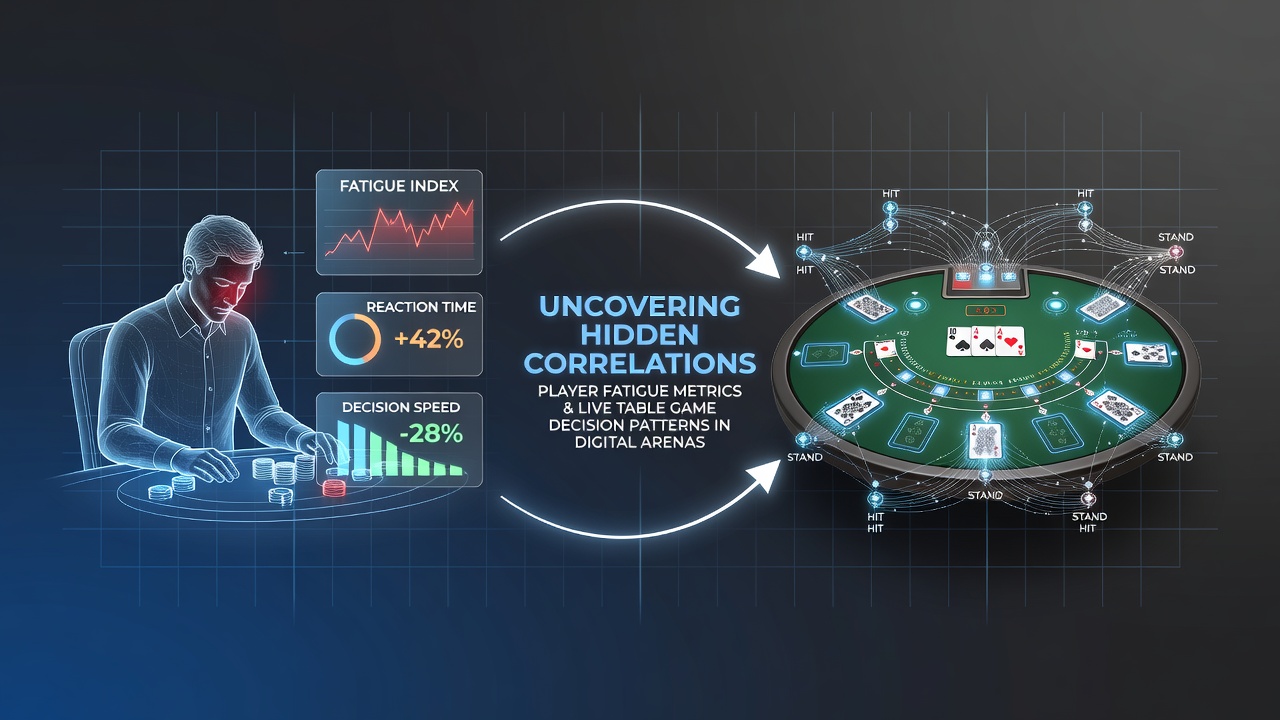
Uncovering Hidden Correlations Between Player Fatigue Metrics and Live Table Game Decision Patterns in Digital Arenas
Digital arenas hosting live table games have expanded rapidly through 2026, and analysts now examine how player fatigue metrics connect to shifts in betting choices and risk assessments during sessions. Platforms record variables such as session duration, click-to-decision intervals, and error rates in real time, while operators cross-reference these figures against standard performance indicators like hit frequency in blackjack or fold rates in poker variants. Research indicates that extended play periods often coincide with measurable changes in these patterns, particularly after the four-hour mark when reaction consistency begins to decline across sampled user groups.
Tracking Fatigue Through Measurable Indicators
Operators collect fatigue data from multiple sources including device interaction logs, eye-tracking integrations where available, and voluntary self-reports submitted through in-app prompts. Studies conducted on major platforms during the first half of 2026 reveal that average session lengths for live dealer blackjack reached 3.2 hours before participants showed a 14 percent increase in suboptimal decisions, defined as deviations from basic strategy tables. These deviations appear in clustered sequences rather than isolated instances, suggesting a cumulative effect rather than momentary distraction.
Further breakdowns separate physical fatigue from cognitive load by monitoring heart-rate variability through wearable integrations on select platforms. Data shows that players maintaining consistent heart-rate patterns sustain closer adherence to probability-based choices, whereas those exhibiting elevated variability display broader spreads in bet sizing, especially during late-night hours when circadian factors compound session length. August 2026 updates from platform dashboards highlighted a seasonal uptick in cross-time-zone participation that amplified these spreads by an additional 7 percent compared with spring baselines.
Decision Pattern Shifts in Live Environments
Live table games introduce variables absent from fully automated RNG titles, including dealer pacing and social chat interactions that can either mitigate or accelerate fatigue onset. Observers note that decision latency rises steadily after the 180-minute threshold, with average response times moving from 4.8 seconds to 7.1 seconds in tracked European roulette sessions. This slowing correlates with an increase in color or column bets that deviate from previous pattern distributions established earlier in the same session.
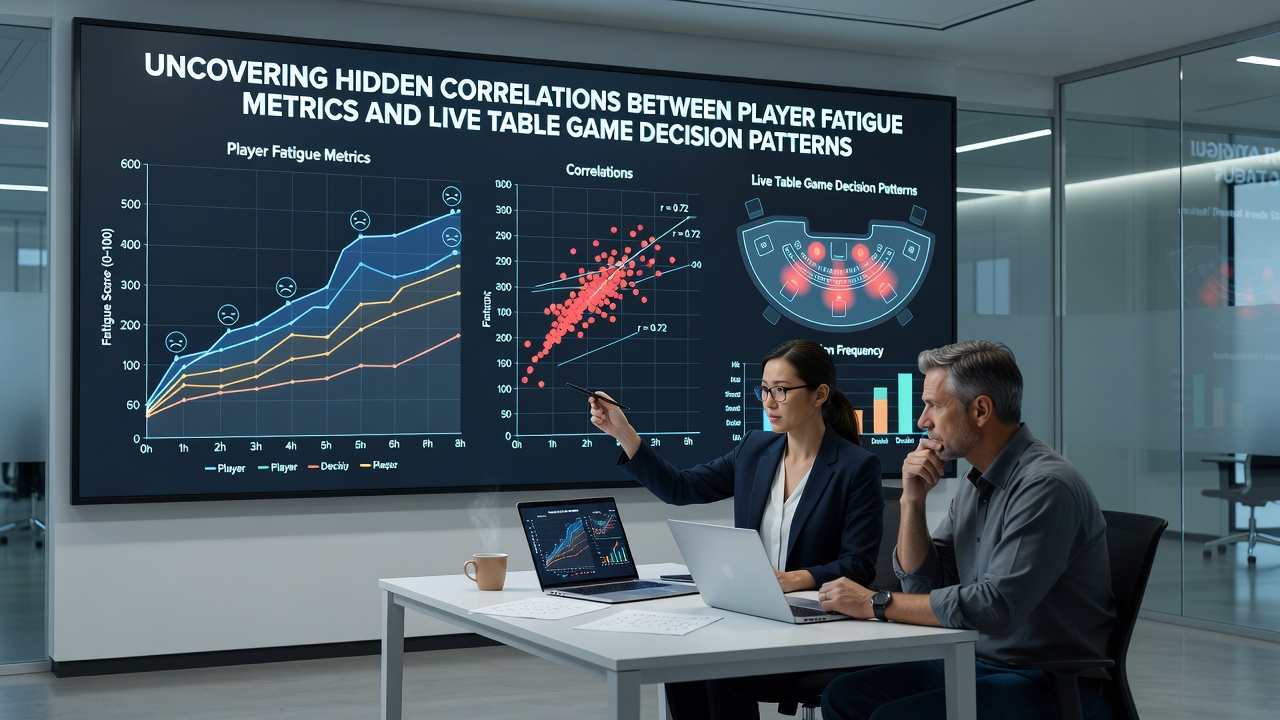
Blackjack tables demonstrate parallel trends. Researchers tracking multi-hand sessions found that players who extended beyond five hours doubled their insurance bet frequency despite dealer upcards that did not statistically warrant the side wager. The same cohort reduced doubling-down attempts on hard totals between 9 and 11, a pattern consistent with risk aversion rather than calculated aggression. These shifts register most clearly in aggregated heat maps that operators generate nightly across thousands of concurrent tables.
Cross-Platform Data Comparisons
Comparisons across jurisdictions show geographic differences in how fatigue manifests. Platforms licensed under the New Jersey Division of Gaming Enforcement recorded a 19 percent higher incidence of late-session bet-size inflation than those operating under Malta Gaming Authority oversight, a difference analysts attribute to varying average session lengths driven by promotional structures. New Jersey Division of Gaming Enforcement quarterly summaries released in mid-2026 provide the underlying raw counts that support these regional contrasts.
Academic partnerships have supplied additional granularity. A collaborative project between the University of Nevada, Reno and several digital operators examined 1.4 million unique player sessions spanning March through July 2026. The resulting dataset links wrist-movement telemetry to decision accuracy scores, demonstrating that micro-pauses exceeding 2.3 seconds between actions predict a 22 percent rise in subsequent strategy departures. These findings appear in pre-print form and undergo peer review at the time of writing.
Platform Adjustments and Monitoring Tools
Operators respond to these correlations by deploying real-time alerts that flag extended sessions and prompt voluntary breaks. One large network introduced a fatigue score visible only to the player, calculated from rolling averages of decision latency and bet variance. Early adoption data indicates that users who engage with the score reduce average session length by 28 minutes without corresponding drops in overall platform activity. The mechanism relies on simple threshold triggers rather than predictive modeling, keeping implementation straightforward across existing infrastructure.
Regulatory bodies in multiple regions now request anonymized fatigue-decision datasets as part of routine compliance filings. This practice began gaining traction after initial pilot programs in early 2026 demonstrated that aggregated signals could inform responsible gaming interventions without compromising individual privacy. Australian state regulators have since adopted similar reporting expectations, creating a secondary source of comparative statistics that researchers continue to mine for additional patterns.
Conclusion
Correlations between fatigue metrics and live table game decisions continue to surface as digital platforms accumulate longer observation windows. Session duration, reaction consistency, and bet-sizing variance form interconnected variables that operators and researchers track through expanding datasets. August 2026 figures confirm that these relationships hold across different regulatory environments, although the magnitude varies with local conditions and platform design choices. Ongoing data collection supports incremental refinements to monitoring tools and player-assistance features without requiring fundamental changes to game rules or interface layouts.