Tracing the connection between altitude variations and endurance levels in soccer fixtures across different venues
Jordan Hartmann · Jun 24, 2026
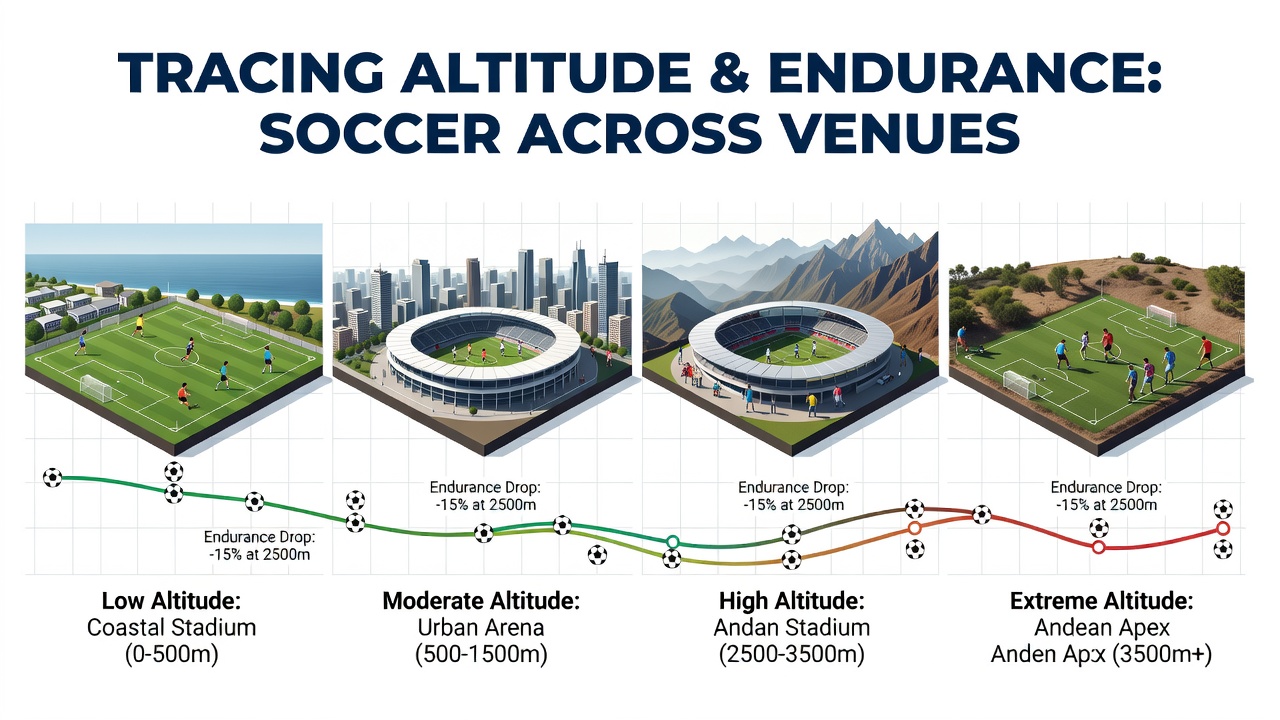
Tracing the connection between altitude variations and endurance levels in soccer fixtures across different venues
Altitude changes create measurable shifts in how soccer players sustain effort during matches, and researchers have tracked these patterns across venues that range from sea level to elevations above 3,000 meters. Lower air pressure reduces oxygen availability, which forces the body to work harder to deliver the same amount of fuel to working muscles, and this effect shows up clearly in heart rate data, distance covered, and sprint frequency recorded by tracking systems.
Venues such as Estadio Azteca in Mexico City sit at roughly 2,240 meters while others like Estadio Hernando Siles in La Paz reach 3,601 meters, and teams that arrive without proper acclimatization often record lower total running distances in the second half compared with matches played closer to sea level. Data collected from CONMEBOL and CONCACAF qualifiers between 2023 and 2025 shows average high-speed running drops between 8 and 12 percent when elevation exceeds 2,000 meters, yet recovery metrics improve once players spend seven to ten days at the new altitude before kickoff.
Physiological responses to reduced oxygen
The body responds to thinner air by increasing breathing rate and heart output, while hemoglobin levels rise over several days as part of natural acclimatization, and studies published in sports physiology journals document that maximal oxygen uptake falls approximately 7 percent for every 1,000 meters gained above sea level. Soccer demands repeated bursts of high-intensity effort interspersed with lower-intensity recovery periods, so the reduced aerobic capacity hits hardest during repeated sprints and pressing sequences late in games.
Teams that train at moderate altitude before traveling to higher sites often maintain better blood oxygen saturation levels, and GPS data from South American league matches indicate that players who follow structured altitude camps cover 400 to 600 more meters at high intensity than teammates who arrive directly from lowland bases. June 2026 schedules already list several CONCACAF Nations League fixtures at elevation, giving medical staffs additional opportunities to test individualized acclimatization protocols ahead of larger summer tournaments.
Performance patterns across specific venues
Matches played at Estadio Azteca regularly produce lower total distance figures than comparable games at BBVA Stadium in Houston, which sits near sea level, and analysts note that visiting sides from coastal regions frequently show steeper declines in work rate after the 60-minute mark. Quito's Estadio Olímpico Atahualpa, located at 2,850 meters, presents similar challenges for traveling clubs from Argentina and Brazil, where historical match logs reveal an average reduction of 9 percent in high-intensity efforts during the final 30 minutes.
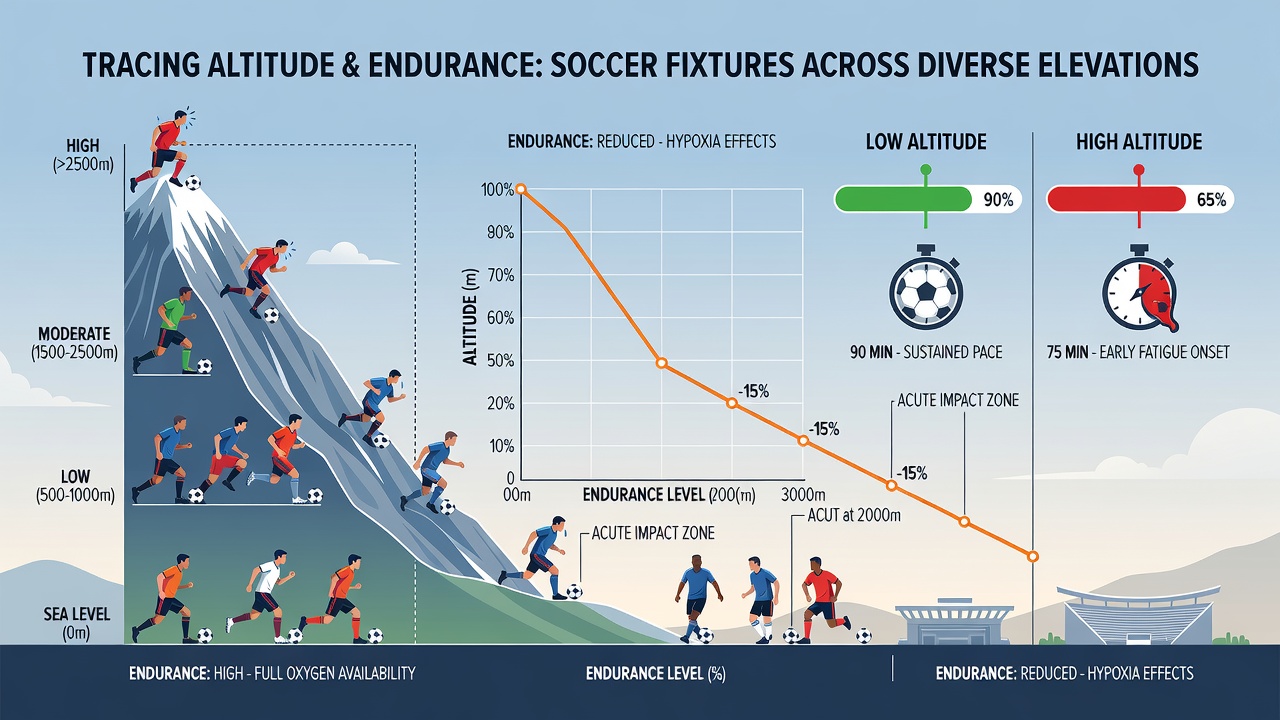
European clubs participating in Copa Libertadores ties have documented parallel trends, and one study released by the University of Colorado tracked heart-rate variability across multiple altitude exposures, finding that players needed at least 72 hours for basic physiological adjustment yet required five to seven days before endurance metrics stabilized near baseline. Venues at intermediate heights such as Johannesburg's FNB Stadium, around 1,700 meters, produce milder effects that still register in aggregated league statistics when compared with matches hosted at Cape Town's sea-level grounds.
Data collection methods and recent findings
Modern tracking technology captures every meter run and every acceleration, allowing researchers to isolate altitude as a variable while controlling for temperature, humidity, and opposition strength, and figures released by FIFA's technical department in early 2026 confirm that endurance gaps narrow when squads follow evidence-based preparation timelines. Scientists continue to examine how hydration strategies and carbohydrate intake interact with lower oxygen environments, since dehydration accelerates fatigue even further at elevation.
One ongoing project coordinated by the Australian Institute of Sport examines recovery timelines for athletes crossing multiple time zones and elevation changes simultaneously, and preliminary results suggest that sleep quality and jet-lag management influence how quickly endurance returns to normal after arrival. Observers note that clubs with larger medical budgets often achieve better outcomes because they can afford extended training camps at intermediate altitudes before important away fixtures.
Implications for scheduling and preparation
League organizers and national federations have started incorporating altitude considerations into fixture lists, especially when teams must travel between drastically different elevations within a short window, and the 2026 international calendar already reflects adjustments that give squads additional rest days before high-altitude contests. Medical guidelines recommend gradual ascent profiles, yet practical constraints such as travel costs and congested domestic schedules sometimes limit how closely teams can follow those recommendations.
Conclusion
Altitude variations produce consistent, measurable effects on endurance markers across soccer venues worldwide, and the data gathered from multiple competitions continue to refine preparation strategies for players and support staff alike. As tracking technology improves and more longitudinal studies accumulate, teams gain clearer roadmaps for managing the physiological demands of elevated competition sites.