Tracing Global Supply Chain Disruptions in Online Platform Algorithms for Multi-League Outcome Modeling
Logan Schmitt · Jul 13, 2026

Tracing Global Supply Chain Disruptions in Online Platform Algorithms for Multi-League Outcome Modeling
Global supply chain disruptions have reshaped how online platforms gather, process, and apply data within algorithms designed for multi-league outcome modeling, and researchers continue to track these effects through 2026. Semiconductor shortages that began earlier in the decade persisted into July 2026, according to reports from the U.S. Federal Reserve, forcing data centers that host prediction engines to adjust processing schedules while they awaited component deliveries from Asian manufacturers. These delays ripple through the systems that ingest live statistics from leagues across soccer, basketball, baseball, and hockey, because the hardware that runs complex statistical models depends on steady supplies of specialized chips.
Data Acquisition Challenges in Multi-League Environments
Online platforms rely on continuous feeds from sensors, cameras, and league databases to train outcome models, yet logistics bottlenecks at major ports have interrupted shipments of equipment used to collect that raw data. Observers note that shipping container shortages in the first half of 2026 slowed deliveries of high-speed networking gear to European and North American facilities, and this created temporary gaps in real-time data pipelines that serve multiple leagues simultaneously. Researchers at institutions studying algorithmic sports analytics have documented how even brief interruptions in sensor calibration hardware lead to incomplete datasets, which in turn require platforms to recalibrate their models using historical records instead of fresh inputs.
Companies that operate these platforms have responded by diversifying suppliers across different continents, although the process takes time and requires new contracts that meet regulatory standards in each region. Data from the European Commission on critical technology supply chains shows that firms sourcing components from both Taiwan and Vietnam experienced fewer outages than those dependent on single sources, and this pattern holds for the infrastructure that supports multi-league modeling tools.
Algorithm Performance Under Resource Constraints
When hardware availability fluctuates, algorithms that combine data from several leagues must prioritize which models receive full computational resources, and this affects the granularity of predictions for less prominent competitions. Studies conducted by academic teams in Australia have examined how reduced GPU access during supply constraints forces platforms to simplify neural network layers, and those adjustments can lower precision in cross-league comparisons that rely on shared variables such as player fatigue metrics or travel schedules. The result is that outcome models for major leagues continue to function at near-normal levels while secondary leagues see increased reliance on statistical smoothing techniques.
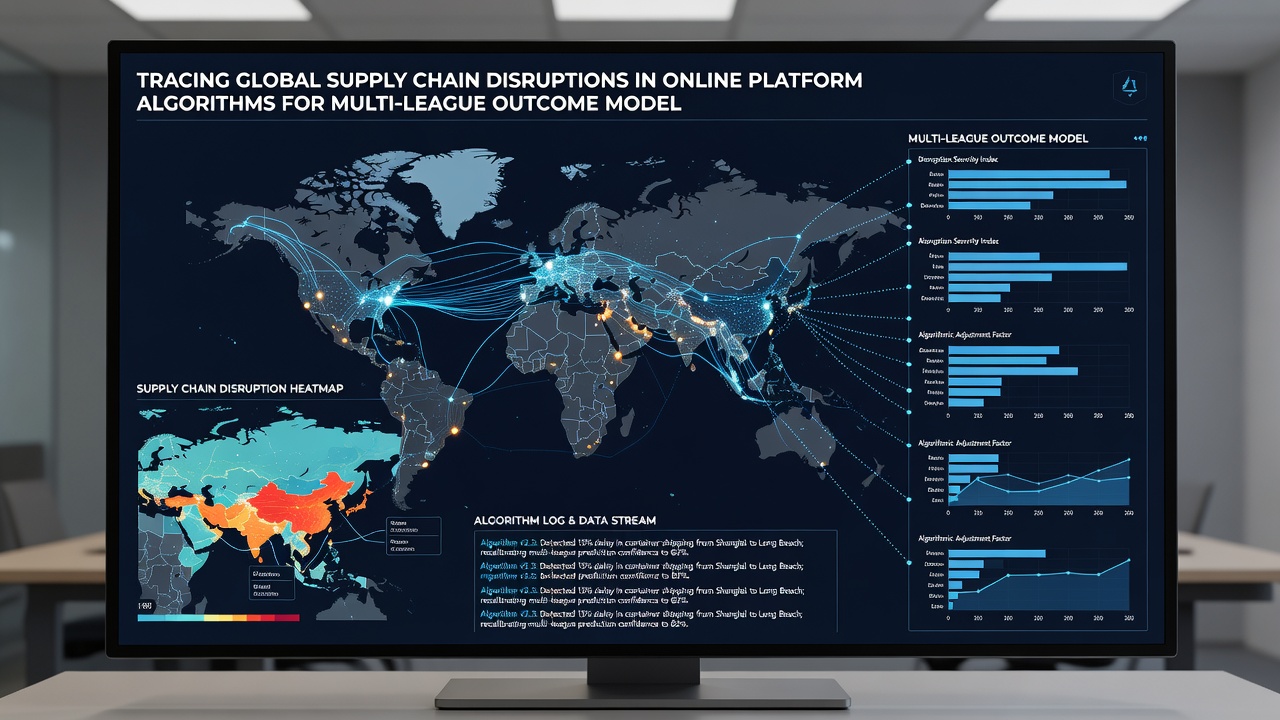
Platform operators have introduced tiered processing queues that allocate capacity based on league size and data volume, yet these systems require ongoing monitoring to avoid bottlenecks when new disruptions occur. Figures released by Statistics Canada in mid-2026 indicated that facilities serving North American sports data experienced measurable latency increases during periods of component scarcity, and similar patterns appeared in Asian data hubs that support international league modeling.
Regional Variations and Mitigation Strategies
Different geographic regions have faced distinct supply issues that influence how platforms maintain consistent algorithm performance. Ports in South America reported extended customs delays for specialized servers in early 2026, while facilities in the Middle East dealt with fluctuating energy supplies that affected cooling systems for high-density computing clusters. Organizations tracking technology infrastructure, such as the OECD, have compiled datasets showing that platforms with redundant sites across multiple continents maintained higher uptime for their outcome models during these episodes.
Engineers at several large platforms have adopted edge computing approaches that shift some processing closer to data sources, thereby reducing dependence on central facilities vulnerable to single-point disruptions. This method allows partial model updates to continue even when long-haul shipments of replacement parts are delayed, and it has proven effective for maintaining basic functionality across diverse league schedules.
Conclusion
Supply chain pressures continue to shape the operational landscape for online platforms that run multi-league outcome models, and ongoing monitoring by regulatory and research bodies provides teh data needed to understand these dynamics. As hardware markets stabilize and new sourcing networks mature, platforms are expected to refine their approaches to data handling and computational allocation in ways that account for persistent global logistics variability. The patterns observed through July 2026 illustrate how interconnected technical and material supply lines directly influence the reliability of algorithmic systems that serve multiple sports environments at once.