Seasonal Weather Shifts and Their Effects on Endurance Events in Thoroughbred Racing Circuits
Finley Klein · May 20, 2026
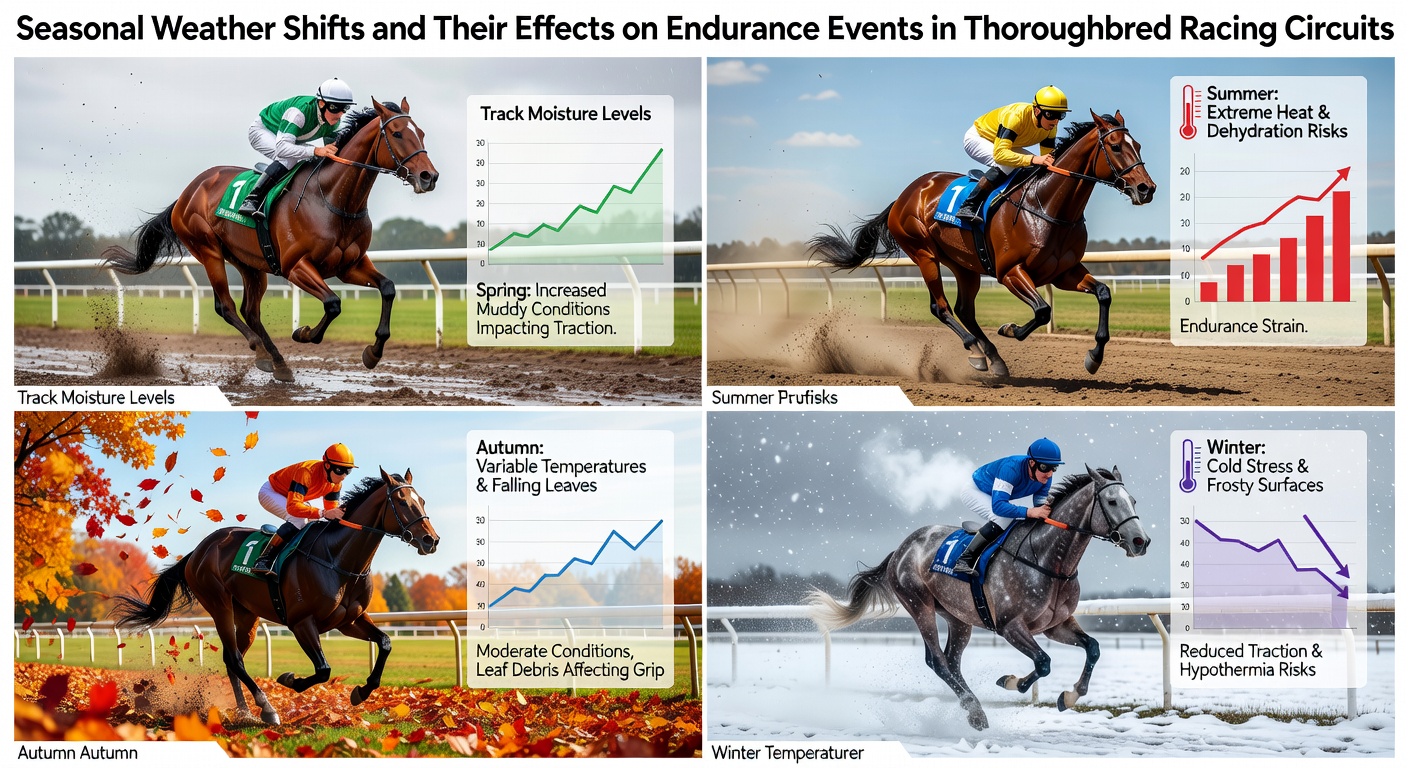
Seasonal Weather Shifts and Their Effects on Endurance Events in Thoroughbred Racing Circuits
Seasonal weather patterns shape the demands placed on thoroughbreds in longer-distance races across major circuits, where endurance becomes the deciding factor once early speed fades. Circuits in North America, Australia, and parts of Europe adjust schedules adn track maintenance routines each year because temperature swings, rainfall volumes, and wind exposure alter footing, recovery times, and injury rates. Data collected by racing authorities shows that races beyond 2,000 metres register the clearest performance changes when weather deviates from seasonal norms.
Spring Transitions and Track Moisture
Spring brings rising temperatures alongside inconsistent rainfall that saturates turf courses and creates deeper cushion on dirt surfaces. Horses running endurance events at this time encounter variable ground that forces stride adjustments and increases oxygen demand. Observers note that Canadian circuits such as Woodbine in Ontario often record slower overall times in May compared with late-summer benchmarks because residual winter moisture lingers in the soil profile.
Trainers respond by selecting horses with proven ability on yielding ground and by modifying training gallops to build stamina under softer conditions. Records from the past decade indicate that races held after heavy April showers produce higher rates of pulled muscles when the surface firms quickly under sudden sunshine.
Summer Heat and Physiological Stress
By early summer the focus shifts to heat management and hydration protocols. High ambient temperatures combined with humidity reduce a horse’s ability to dissipate heat during prolonged efforts, particularly in races like the 2,400-metre events staged at Australian venues. Researchers at equine performance laboratories have documented elevated post-race lactate levels and delayed heart-rate recovery when temperatures exceed 30 degrees Celsius.
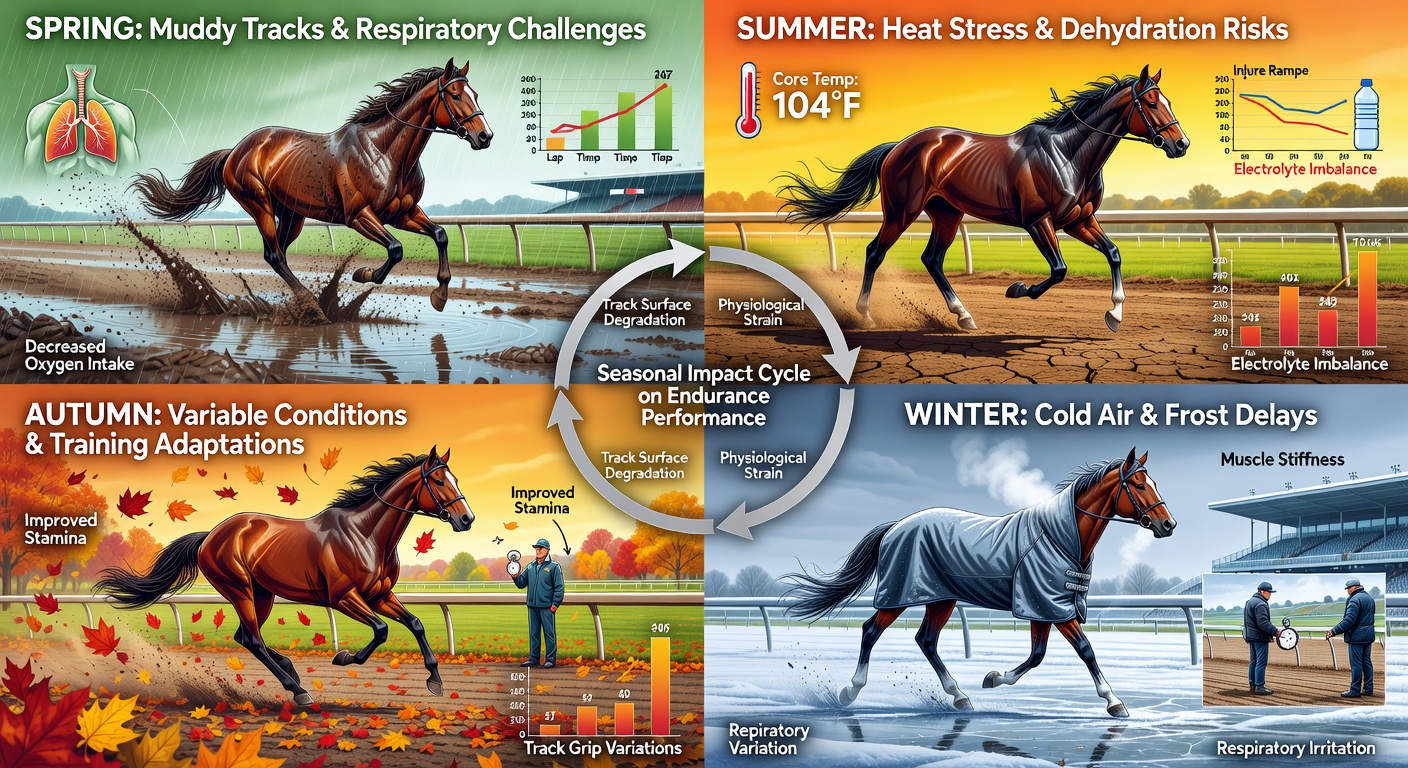
Track superintendents increase irrigation cycles at night and apply cooling mists in holding areas to keep surface temperatures within acceptable ranges. In May 2026 several U.S. circuits announced earlier post times for distance races precisely to avoid peak afternoon heat, a scheduling change supported by veterinary monitoring data.
Autumn Cooling and Wind Exposure
Autumn introduces falling temperatures and stronger prevailing winds that dry out tracks and create firmer, sometimes brittle surfaces. Endurance runners must then contend with reduced cushioning and increased concussion forces on joints and tendons. Studies compiled by the Australian Racing Board show a measurable rise in superficial digital flexor tendon injuries during the southern hemisphere spring carnival when preceding winter rains give way to sudden dry spells.
Wind also affects respiratory effort because horses face headwinds on exposed stretches of certain tracks. Trainers incorporate interval work against fans in stables to prepare respiratory systems for these conditions, while race-day officials monitor wind speed thresholds that can prompt distance adjustments or rail movements.
Winter Preparations and Frost Management
Winter circuits in milder climates still experience frost events that force cancellations or surface alterations. In regions where racing continues, grounds crews apply sand or salt treatments to maintain safe footing, yet these interventions change the energy required for propulsion. Endurance horses competing under such managed conditions often display altered stride lengths until they adapt to the modified surface.
Long-term climate records indicate that circuits at higher latitudes now schedule fewer winter endurance races than two decades ago, shifting those contests to shoulder seasons when weather variability remains more predictable.
Data Patterns Across Circuits
Comparative statistics reveal consistent trends: spring and autumn moisture correlates with higher place-getter spreads in distance races, while summer heat compresses finishing times among the top contenders yet increases the number of non-finishers. A Canadian university analysis covering 15 years of Woodbine and Hastings data found that each additional millimetre of spring rainfall added an average of 1.2 seconds per 1,000 metres in races over 2,000 metres.
Similar patterns appear in southern hemisphere reports, where pre-carnival rainfall totals strongly predict the proportion of horses that complete gruelling events without visible fatigue markers. These figures guide both handicappers and veterinary teams when assessing field sizes for upcoming endurance fixtures.
Conclusion
Seasonal weather shifts continue to dictate preparation, scheduling, and performance expectations for endurance events within thoroughbred racing circuits. Circuits that integrate real-time meteorological data with historical performance records maintain safer conditions and more reliable outcomes across changing climates. Ongoing monitoring through veterinary networks and track management teams ensures that adjustments remain evidence-based rather than reactive.