Mapping Influences of Geopolitical Events on Accessibility of Online Prediction Markets in Restricted Regions
Jordan Hartmann · Jul 10, 2026
Mapping Influences of Geopolitical Events on Accessibility of Online Prediction Markets in Restricted Regions
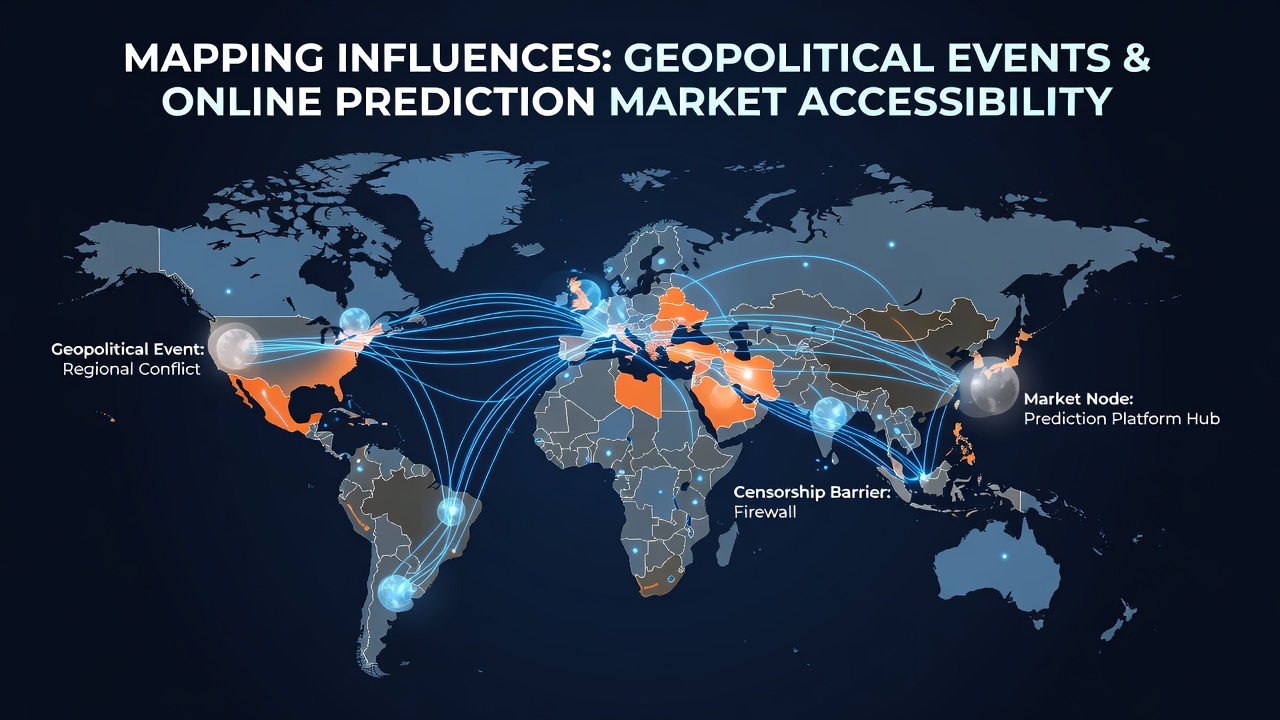
Geopolitical events shape the operational landscape for online prediction markets through sanctions, network restrictions, and shifting regulatory frameworks that limit platform availability in targeted jurisdictions. Observers note that tensions such as trade disputes, territorial conflicts, and financial embargoes often prompt governments to impose blocks on offshore betting sites, yet demand for event-based wagering persists through alternative channels. Data from industry reports indicate that users in affected areas frequently rely on decentralized protocols or proxy services to maintain connectivity during periods of heightened enforcement.
Regional Patterns in Access Restrictions
Countries facing international sanctions exhibit distinct patterns where prediction market platforms encounter domain-level filtering and payment processing barriers. Researchers at academic institutions have documented how users in Eastern Europe and parts of Asia adapt by migrating to blockchain-based alternatives that bypass traditional banking rails. Studies reveal that activity on these networks increased notably after major policy announcements in 2025, with transaction volumes reflecting sustained interest in forecasting political and economic outcomes despite connectivity hurdles.
Authorities in several Middle Eastern states have implemented layered internet controls that affect foreign-hosted prediction services. These measures coincide with broader digital sovereignty initiatives, leading operators to deploy region-specific mirrors or encrypted access points. Figures from regulatory filings show that compliance efforts by platforms sometimes involve voluntary geoblocking to avoid secondary penalties, while participants explore virtual private networks as a standard workaround.
Technological and Market Adaptations
Decentralized prediction protocols have gained traction in restricted environments because they distribute data across peer networks rather than centralized servers. This architecture reduces single-point vulnerabilities when governments target specific domains or IP ranges. One analysis from a Canadian research group found that trading activity on certain protocols remained stable even amid documented outages on centralized exchanges during geopolitical flare-ups in early 2026.
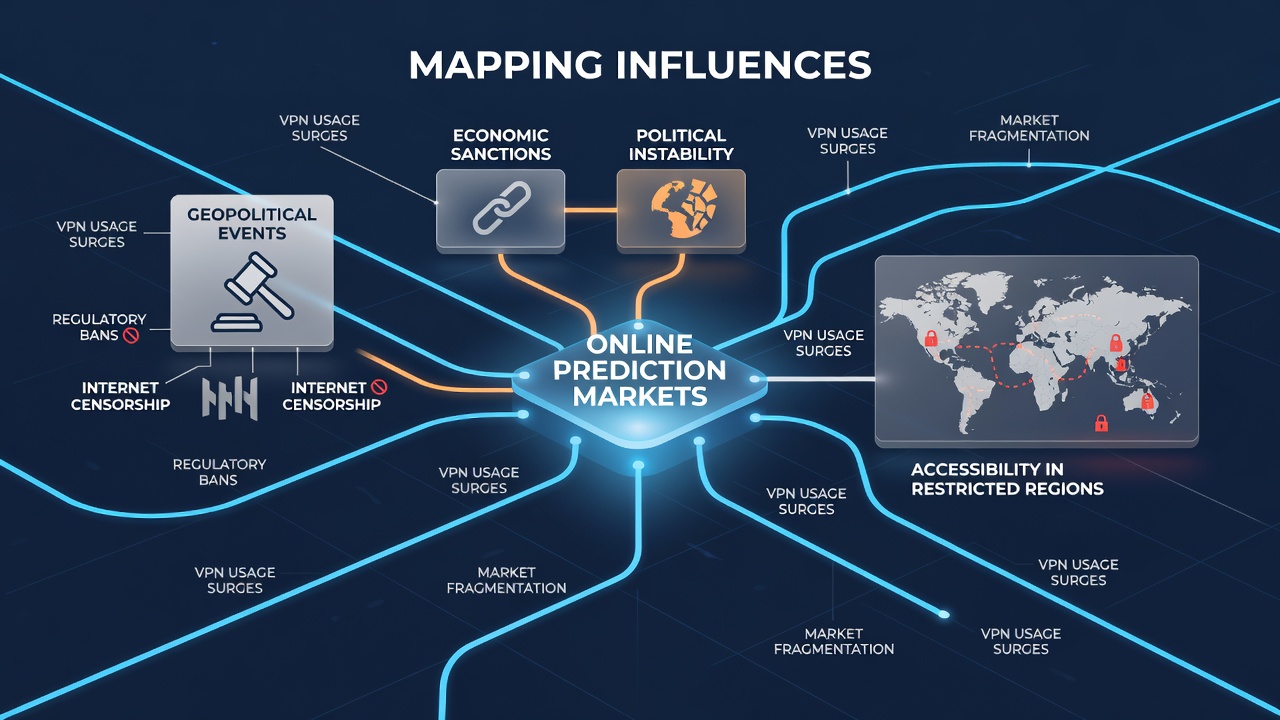
Payment rail disruptions represent another significant influence, as financial sanctions limit credit card and wire transfers to offshore operators. Market participants respond by shifting toward cryptocurrency settlements, which evade conventional oversight in many jurisdictions. Evidence from transaction ledgers indicates that stablecoin usage for prediction contracts rose steadily through mid-2026 in regions under active trade restrictions.
Regulatory Developments Through Mid-2026
International bodies have issued guidance on cross-border digital services that indirectly affects prediction market operators. The European Commission's digital services framework, for instance, outlines obligations for platforms to restrict content in designated high-risk zones, prompting some providers to adjust their onboarding processes. Australian communications regulators have similarly monitored offshore wagering traffic, releasing periodic assessments that track shifts in user behavior following major diplomatic events.
Operators maintain that adaptive compliance strategies allow continued service delivery without direct confrontation with local laws. Data compiled by trade associations show that several platforms introduced enhanced verification layers in July 2026 to align with evolving enforcement priorities across multiple continents.
Conclusion
Geopolitical developments continue to drive measurable changes in how online prediction markets reach users within restricted regions. Patterns of adaptation through technology and alternative protocols demonstrate ongoing resilience in forecasting activity, supported by data from regulatory and academic sources across varied jurisdictions. These dynamics underscore the interplay between policy actions and digital market infrastructure without altering underlying demand for event-based information.