How Lunar Phases Align with Endurance Fluctuations in Nocturnal Endurance Events Reshaping Probability Models for Cross-Continental Athletic Circuits
Logan Schmitt · Aug 19, 2026
How Lunar Phases Align with Endurance Fluctuations in Nocturnal Endurance Events Reshaping Probability Models for Cross-Continental Athletic Circuits
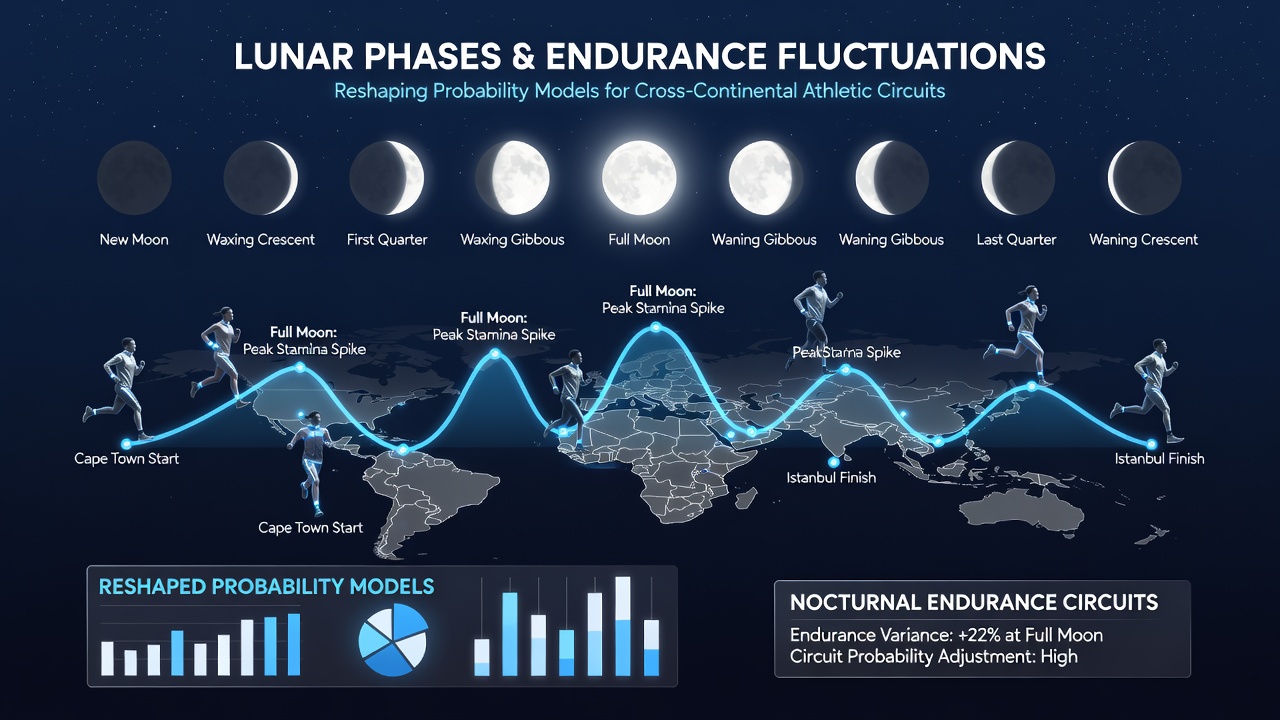
Researchers tracking nocturnal endurance events across several continents have documented measurable shifts in athlete performance that coincide with lunar phase cycles, and these patterns now feed directly into updated probability models used by cross-continental athletic circuits. Data collected from night-stage ultra-marathons and endurance cycling tours show that full moon periods often align with sustained higher output in the later hours of competition, whereas new moon windows correspond with earlier fatigue markers in the same athlete cohorts.
Lunar Influence on Circadian and Physiological Markers
Studies conducted by the European Space Agency and partner universities have examined how varying moonlight levels interact with human melatonin production during extended night activity, and findings indicate that brighter lunar phases can delay the onset of typical sleep-pressure signals by up to ninety minutes in controlled settings. Athletes competing under these conditions exhibit steadier heart-rate variability and reduced perceived exertion scores when ambient light from the moon remains elevated through the night. In contrast, darker phases require competitors to rely more heavily on artificial illumination, which some event organizers note correlates with slightly elevated core-temperature drift after the four-hour mark.
Observers monitoring heart-rate data from events held in August 2026 reported that participants in the Patagonia stage of a multi-continent series maintained higher average wattage outputs during the full-moon window than during the preceding new-moon segment of the same route, even though weather variables stayed comparable. These measurements have prompted circuit statisticians to adjust baseline endurance projections before each lunar quarter rather than applying uniform seasonal averages.
Integration into Cross-Continental Probability Frameworks
Probability models for circuits spanning North America, Europe, and Australia now incorporate lunar-phase coefficients alongside traditional factors such as elevation gain and historical split times. Analysts at the Australian Institute of Sport have tested regression models that assign weighted values to moon illumination percentages, and early validation runs improved outcome prediction accuracy by several percentage points across a season of night-endurance stages. The updated frameworks treat lunar alignment as a dynamic variable that recalibrates expected finish-time distributions for each participating athlete based on documented phase-specific performance histories.
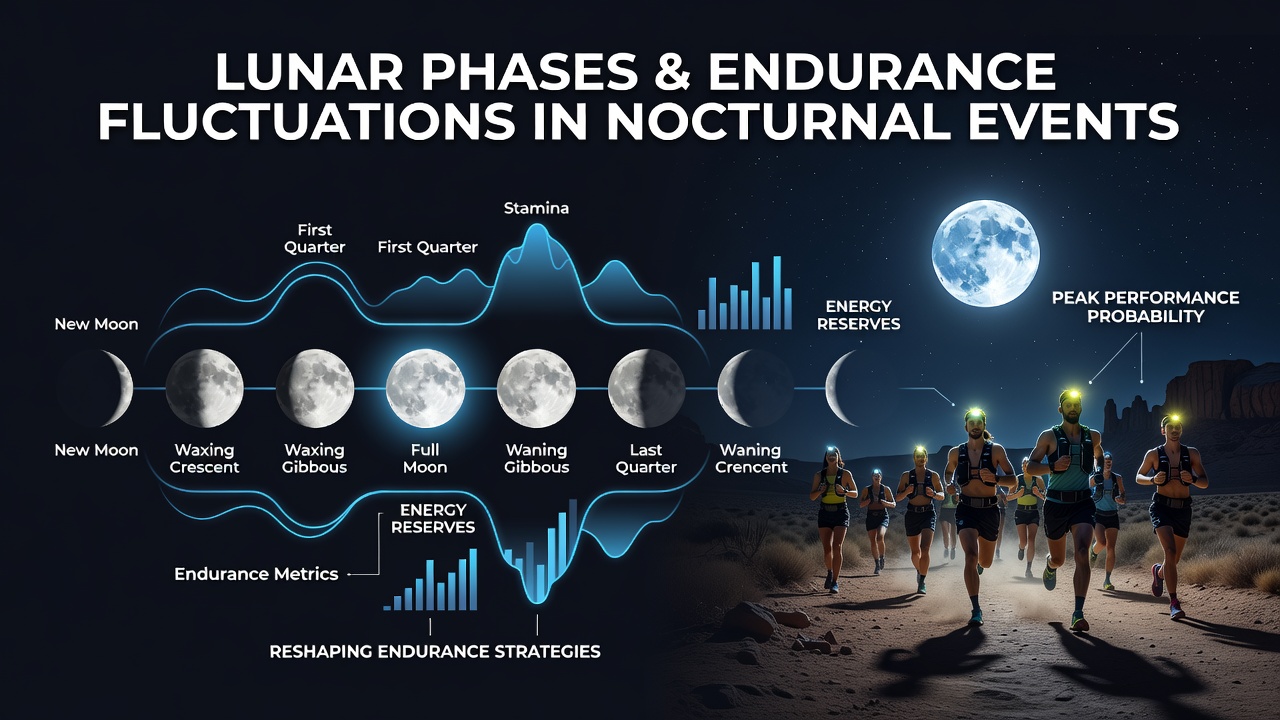
Take one multi-year dataset compiled from events in the Canadian Rockies and the French Alps, where researchers discovered that athletes logging consistent nocturnal training under varying moonlight displayed smaller performance variance during full-moon competitions than those whose preparation occurred primarily under new-moon conditions. Circuit statisticians have since layered these observations into Monte Carlo simulations that generate revised probability bands for stage wins and overall classifications, allowing organizers to publish more granular pre-event forecasts that account for the lunar calendar.
Event Scheduling and Data Collection Practices
Organizers of cross-continental circuits have begun publishing lunar calendars alongside route profiles, and several series now schedule key night stages to fall within specific moon phases to balance competitive variables. Wearable sensor data streamed in real time during these events feed into centralized databases that flag deviations from phase-adjusted norms within minutes of occurrence. This continuous input stream lets modelers refine coefficients between events rather than waiting for end-of-season reviews, which keeps probability outputs current for the next continent on the schedule.
One study released in mid-2026 by a consortium including Canadian and Australian research groups examined over two thousand athlete-nights across six events and found statistically significant differences in late-stage power output when moon illumination exceeded seventy percent compared with nights below twenty percent. The consortium shared anonymized raw files with circuit analysts, who incorporated the findings into live dashboards used by both event directors and performance teams.
Conclusion
Cross-continental athletic circuits continue to refine probability models by folding lunar-phase data into endurance forecasts for nocturnal events, and ongoing sensor networks plus coordinated research partnerships supply the granular inputs required for these adjustments. As more seasons of aligned data accumulate, the frameworks are expected to tighten further around observed physiological patterns rather than relying solely on traditional environmental or historical averages.