How Altitude Variations Shape Performance Metrics in Alpine Ski Events and Inform Probability Models for Digital Roulette Variants
Logan Schmitt · Aug 3, 2026

How Altitude Variations Shape Performance Metrics in Alpine Ski Events and Inform Probability Models for Digital Roulette Variants
Altitude variations affect alpine ski events through measurable changes in oxygen availability, air density, and athlete physiology, while researchers apply those performance datasets to refine probability frameworks used in digital roulette variants. Data from competitions at elevations above 2,000 meters show consistent shifts in gate-to-gate times, heart rate recovery, and error rates compared with sea-level venues.
Performance Data Collection in High-Altitude Venues
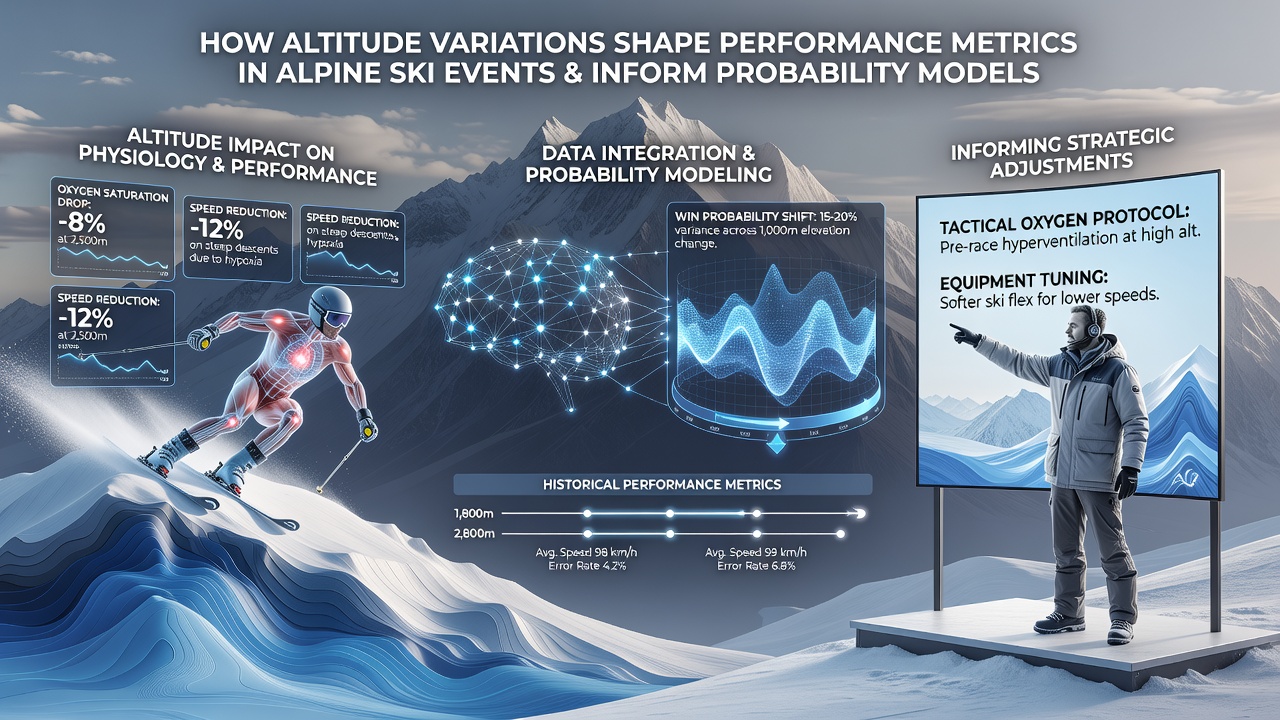
International Ski Federation records indicate that events staged in August 2026 at locations such as Beaver Creek and Val d'Isère produced average run times 1.8 to 3.2 percent slower than equivalent courses at lower elevations, with the difference attributed to reduced partial pressure of oxygen. Heart-rate monitors worn by athletes reveal peak values 8 to 12 beats per minute higher during the same technical sections, and recovery intervals between runs lengthen by 15 to 25 seconds on average.
Coaches and analysts compile these figures alongside wind-speed readings, snow-temperature logs, and GPS-derived velocity profiles. The resulting multivariate datasets contain thousands of timed segments per season, each tagged with precise elevation metadata. Statistical packages then isolate altitude as an independent variable while controlling for athlete fitness, equipment setup, and course preparation.
Statistical Modeling of Variable Conditions
Researchers at the University of Calgary's Sport Technology Research Centre have published regression models that predict performance decrements as a function of elevation gain. Their 2025-2026 season analysis incorporated 14,000 individual timing splits and demonstrated that every additional 500 meters of altitude correlates with a 0.7 percent increase in mean run time for giant-slalom events. The models also quantify increased variance in split times, reflecting greater sensitivity to micro-adjustments in technique under hypoxic stress.
These same regression techniques appear in probability calibration routines for digital roulette platforms. Operators adapt the variance parameters derived from altitude-adjusted ski data to adjust simulation engines that test random-number-generator outputs across millions of virtual spins. The goal remains alignment between observed outcome distributions and theoretical probabilities of 1/37 for European single-zero wheels.
Cross-Domain Application of Metrics
Pattern-recognition algorithms originally tuned on ski-run telemetry now process roulette spin histories to detect subtle deviations from expected randomness. One European gaming laboratory applies a modified version of the ski-derived mixed-effects model to flag sessions where outcome clustering exceeds three standard deviations from baseline. Regulators in Malta and the Isle of Man require such monitoring reports quarterly, citing the same statistical thresholds used in FIS post-event audits.
Additional work links endurance metrics from multi-run ski formats to session-length parameters in roulette variants. Data from the 2026 World Cup season shows that athletes maintain optimal gate accuracy for approximately 45 seconds of continuous high-intensity effort before measurable fatigue sets in. Software engineers translate that temporal window into automated session timers that prompt players after equivalent spin counts, aiming to keep engagement within statistically stable ranges.
Regulatory and Industry Integration
Gaming associations in Canada and Australia have begun referencing altitude-adjusted performance studies when drafting technical standards for live-dealer and RNG roulette products. The standards specify that probability models must incorporate at least three environmental or physiological variance factors before certification. As a result, testing protocols now include Monte Carlo runs seeded with distributions drawn from both ski and roulette datasets, ensuring that reported house-edge figures remain consistent across simulated high- and low-variance conditions.
Conclusion
Altitude-driven changes in alpine skiing generate granular performance metrics that researchers repurpose to calibrate probability models for digital roulette variants. The transfer relies on shared statistical methods rather than thematic similarity, allowing elevation-tagged timing data to refine variance estimates and session parameters used by gaming operators and regulators. Continued collection of both athletic and gaming datasets supports iterative improvements in these cross-domain applications through the 2026 season and beyond.