Examining Wearable Technology Data Integration for Performance Forecasting in Endurance-Based Competitions
Finley Klein · Jul 15, 2026
Examining Wearable Technology Data Integration for Performance Forecasting in Endurance-Based Competitions
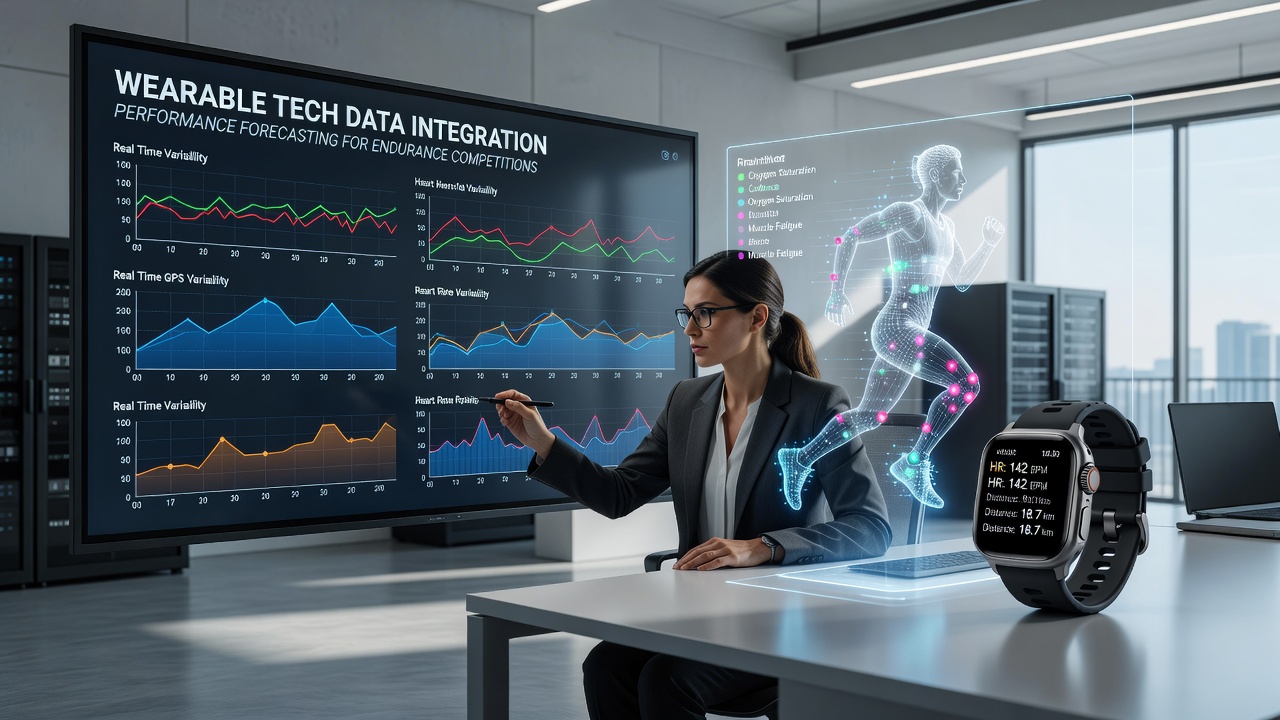
Endurance competitions such as marathons, Ironman triathlons, and ultra-distance cycling events generate extensive performance data through wearable devices, and integration of this information supports forecasting models that predict outcomes based on physiological markers. Devices from manufacturers including Garmin, Polar, and Coros capture metrics like heart rate variability, power output, GPS-tracked pace, and sleep patterns, while these streams feed into analytical platforms that combine real-time inputs with historical training logs.
Data Collection and Device Capabilities
Modern wearables record multiple variables simultaneously during training sessions and races, and athletes transmit this information to cloud-based systems where algorithms process the inputs for pattern identification. Researchers at institutions including Stanford University have documented how chest-strap monitors and wrist-based optical sensors achieve accuracy rates above 95 percent for heart rate during steady-state efforts, yet they note variability increases during high-intensity intervals. Integration occurs through application programming interfaces that link device outputs with software like TrainingPeaks and Strava, allowing seamless aggregation across multiple sensors worn on the body.
July 2026 saw expanded adoption of multi-device ecosystems at major events including the Western States Endurance Run, where participants uploaded combined data from armbands, smartwatches, and foot pods. These systems track cadence, ground contact time, and vertical oscillation alongside environmental factors such as temperature and elevation gain, creating comprehensive datasets that exceed 10,000 data points per athlete per event.
Integration Techniques and Analytical Methods
Performance forecasting relies on machine learning models that merge wearable outputs with external variables including course profiles and weather conditions, and these models apply regression analysis plus neural networks to estimate finish times or detect overtraining risks. Data pipelines normalize inputs from different manufacturers by converting raw signals into standardized formats, while platforms such as Firstbeat Analytics and Whoop provide normalized scores for recovery and strain that feed directly into prediction engines. Observers note that combining longitudinal training data with acute race-day metrics improves forecast precision by 15 to 20 percent compared with single-source approaches, according to studies published in the European Journal of Sport Science.
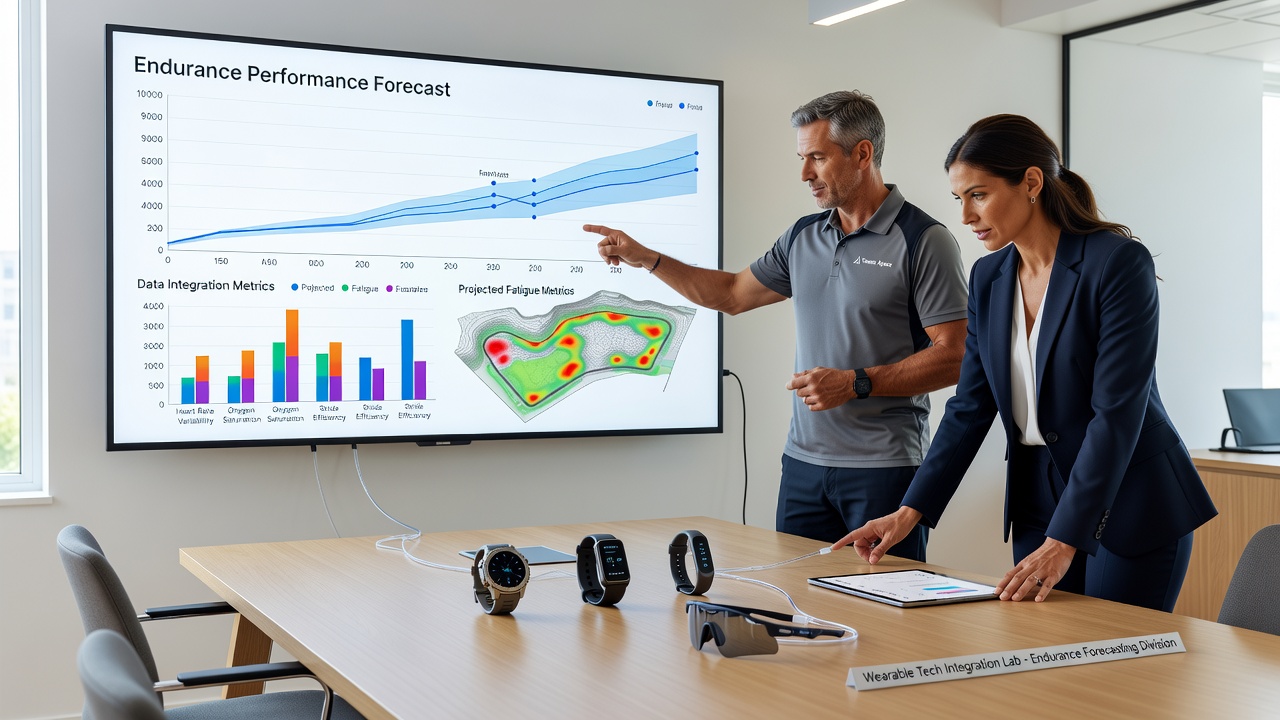
Teams in professional cycling squads have implemented centralized databases that pull synchronized feeds from rider wearables and bike computers, and analysts apply these combined datasets to simulate race scenarios hours before start times. The process involves feature engineering that extracts derived metrics such as training stress scores and acute-to-chronic workload ratios, then these values become inputs for probabilistic models that output likelihood ranges for target performances.
Applications in Competition Forecasting
Event organizers and coaching staffs use integrated wearable data to generate individualized predictions that account for pacing strategies and fatigue thresholds, while national governing bodies in Australia have incorporated such tools into athlete monitoring programs at the Australian Institute of Sport. Forecasts derived from these systems help identify athletes likely to achieve personal bests or qualify for championship events, and they also flag potential medical concerns when heart rate recovery deviates from established baselines. One study conducted across multiple European ultra-marathons revealed that models incorporating both wearable-derived heart rate variability and GPS elevation data achieved correlation coefficients above 0.85 when compared with actual finishing times.
Commercial platforms now offer API access that permits third-party developers to build custom forecasting applications, and these tools process anonymized aggregate data from thousands of users to refine population-level benchmarks. Endurance athletes competing in July 2026 events benefited from updated firmware releases that improved data synchronization across devices, reducing latency in real-time dashboards used by support crews along race courses.
Challenges in Data Standardization and Privacy
Despite advances, inconsistencies remain across device manufacturers regarding sampling rates and metric definitions, which complicates cross-platform integration efforts, yet industry groups including the Sports Tech Research Network continue developing common data schemas to address these gaps. Privacy regulations in the European Union require explicit consent for storage and sharing of biometric information collected during competitions, and athletes must navigate data ownership agreements when signing up for analysis services. Validation studies emphasize the need for device-specific calibration protocols, because unadjusted readings from consumer-grade sensors can introduce errors exceeding 5 percent in power and pace calculations during prolonged efforts.
Future Directions and Ongoing Research
Emerging work focuses on incorporating additional sensor types such as continuous glucose monitors and muscle oxygen saturation devices into unified forecasting frameworks, while academic researchers explore reinforcement learning techniques that adapt predictions dynamically as new data arrives during an event. Collaborative projects between universities and equipment makers aim to create open-source toolkits that lower barriers for smaller teams seeking advanced analytics capabilities. These developments build on existing infrastructure and support more granular performance projections across diverse endurance disciplines.
Conclusion
Integration of wearable technology data continues to expand the scope of performance forecasting in endurance competitions, and standardized pipelines now support models that synthesize physiological, biomechanical, and environmental inputs into actionable predictions. Ongoing refinements in device accuracy and analytical methods sustain this evolution, while regulatory and technical frameworks guide responsible implementation across global events.