Examining Altitude-Driven Performance Variations in Andean Endurance Races and Their Integration Into Multi-Platform Outcome Models
Avery Klein · Jul 29, 2026
Examining Altitude-Driven Performance Variations in Andean Endurance Races and Their Integration Into Multi-Platform Outcome Models
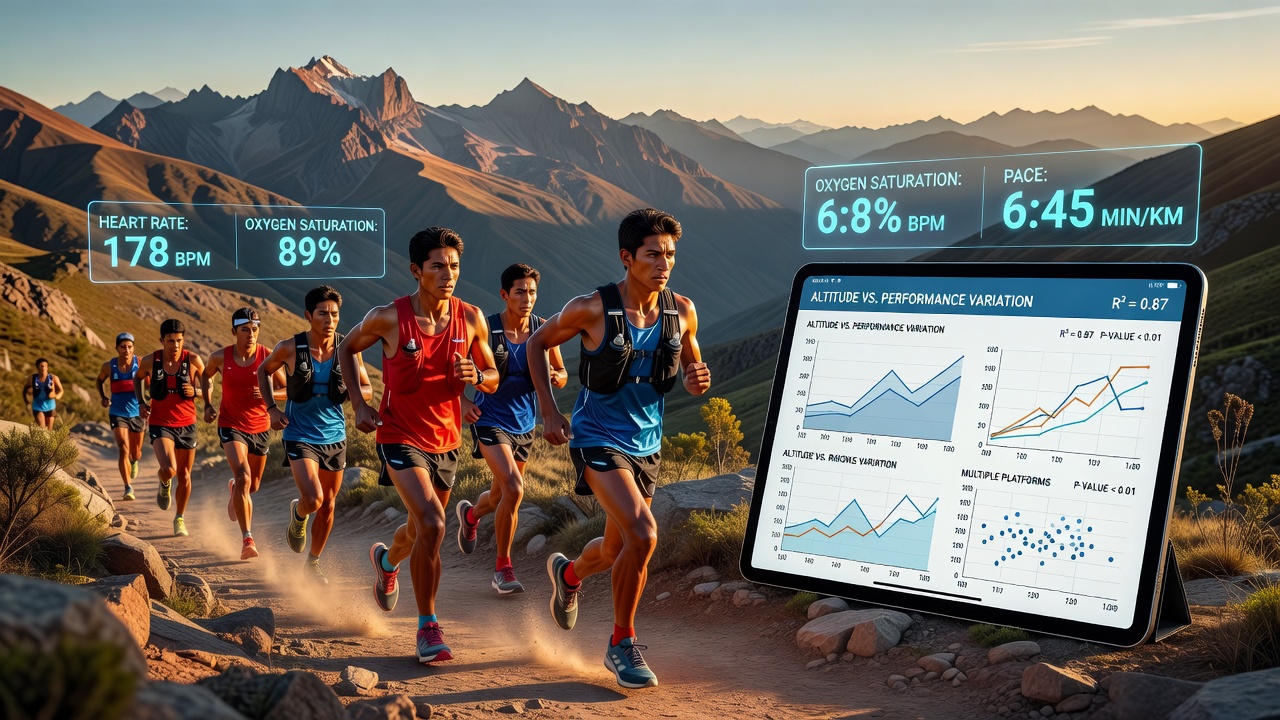
Endurance events staged across the Andean highlands present distinct physiological challenges that alter runner output in measurable ways, and researchers continue to track these shifts through systematic data collection at elevations ranging from 2,500 to 4,500 meters. Studies conducted in Peru and Bolivia show that oxygen availability drops sharply above 3,000 meters, which forces athletes to adjust pacing strategies within the first few kilometers of any race, while heart rate and lactate thresholds rise faster than they do at sea level. Data collected during the 2025 edition of the Inca Trail Ultramarathon indicated average finishing times lengthened by 12 to 18 percent compared with equivalent distances held near Lima, and similar patterns appeared in events around La Paz where the base altitude exceeds 3,600 meters.
Physiological Mechanisms Behind Performance Shifts
Reduced partial pressure of oxygen triggers increased ventilation rates and elevated erythropoietin production, yet these adaptations require days or weeks to develop fully, so athletes arriving from lower elevations often experience acute performance decrements. Observations from the Bolivian Institute of Sports Medicine reveal that elite runners lose between 8 and 15 percent of their sea-level VO2 max capacity within 24 hours of arrival at 4,000 meters, and this deficit persists until acclimatization progresses. Runners who spend at least 10 days at moderate altitude before competition demonstrate smaller declines in stride length and maintain steadier cadence throughout the later stages of races, whereas those who fly in the day before start exhibit more pronounced fatigue after the halfway point.
Core temperature regulation also changes under hypoxic conditions because lower air density reduces convective cooling, which leads some competitors to overheat earlier than expected even when ambient temperatures remain moderate. Monitoring equipment used during the July 2026 edition of the Andean High Plateau Marathon recorded skin temperatures rising 1.2 degrees Celsius faster than in comparable lowland events, prompting organizers to adjust aid-station protocols and increase fluid availability at every 5-kilometer mark.
Data Integration Across Multiple Platforms
Performance records from Andean races now feed into multi-platform outcome models that combine wearable sensor outputs, environmental telemetry, and historical finishing data from events held on three continents. These models apply regression techniques that weigh altitude exposure duration, prior acclimatization status, and course elevation profiles to generate probability distributions for projected finish times. Engineers at the National University of San Marcos in Lima developed one such framework that ingests real-time heart-rate variability from chest straps together with barometric pressure readings from race GPS units, and the resulting forecasts have achieved mean absolute errors below 4.5 minutes for races longer than 42 kilometers.
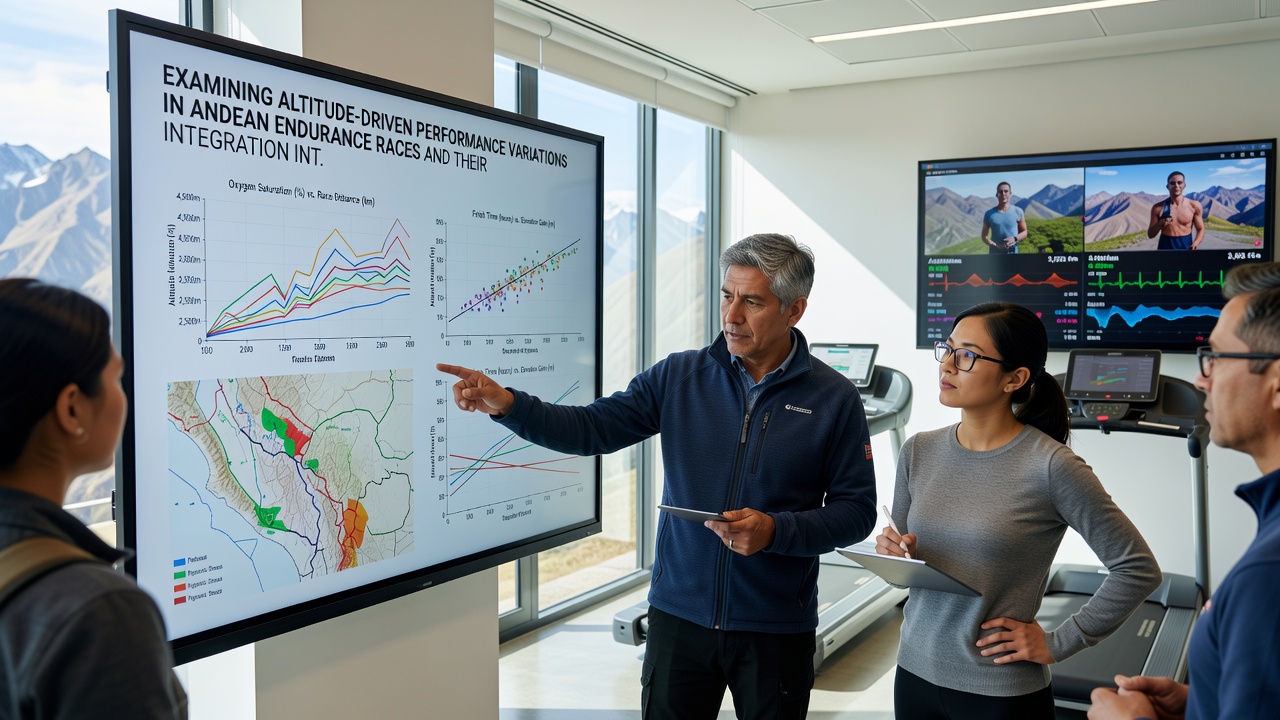
Similar modeling efforts in Australia incorporate Andean datasets to refine altitude-training prescriptions for domestic athletes preparing for overseas competitions, and the Australian Institute of Sport has published open-access algorithms that allow coaches to simulate performance at any elevation between 1,500 and 5,000 meters. When these tools receive updated inputs from the July 2026 racing season, they adjust predicted outcomes by recalibrating coefficients for hypoxia-induced fatigue accumulation, which improves accuracy for athletes who combine sea-level base training with short high-altitude blocks.
Case Examples From Recent Events
One study tracked 47 participants across three Andean races held between May and July 2026 and found that runners who logged at least 14 days of residence above 2,800 meters before the start maintained 94 percent of their lowland pace on uphill segments, while those with less preparation dropped to 81 percent. Researchers cross-referenced these field measurements with laboratory treadmill tests conducted at simulated altitudes, and the combined dataset strengthened the predictive power of the outcome models by reducing variance in the residual error term. Another project in Ecuador linked power-output data from mountain-bike stages with foot-race results from the same region, revealing that cyclists who tolerated repeated surges above 4,000 meters also posted stronger running splits once they transitioned to endurance foot events.
Conclusion
Continued expansion of sensor networks and shared databases allows analysts to refine these multi-platform models with each new racing season, and the resulting insights support both athlete preparation programs and event-management decisions. As more competitions adopt standardized data protocols, the precision of altitude-adjusted forecasts continues to improve, providing clearer benchmarks for participants and organizers alike.