Decoding Biomechanical Thresholds in Live Event Selections for Multi-Sport Platforms
Logan Schmitt · May 22, 2026
Decoding Biomechanical Thresholds in Live Event Selections for Multi-Sport Platforms
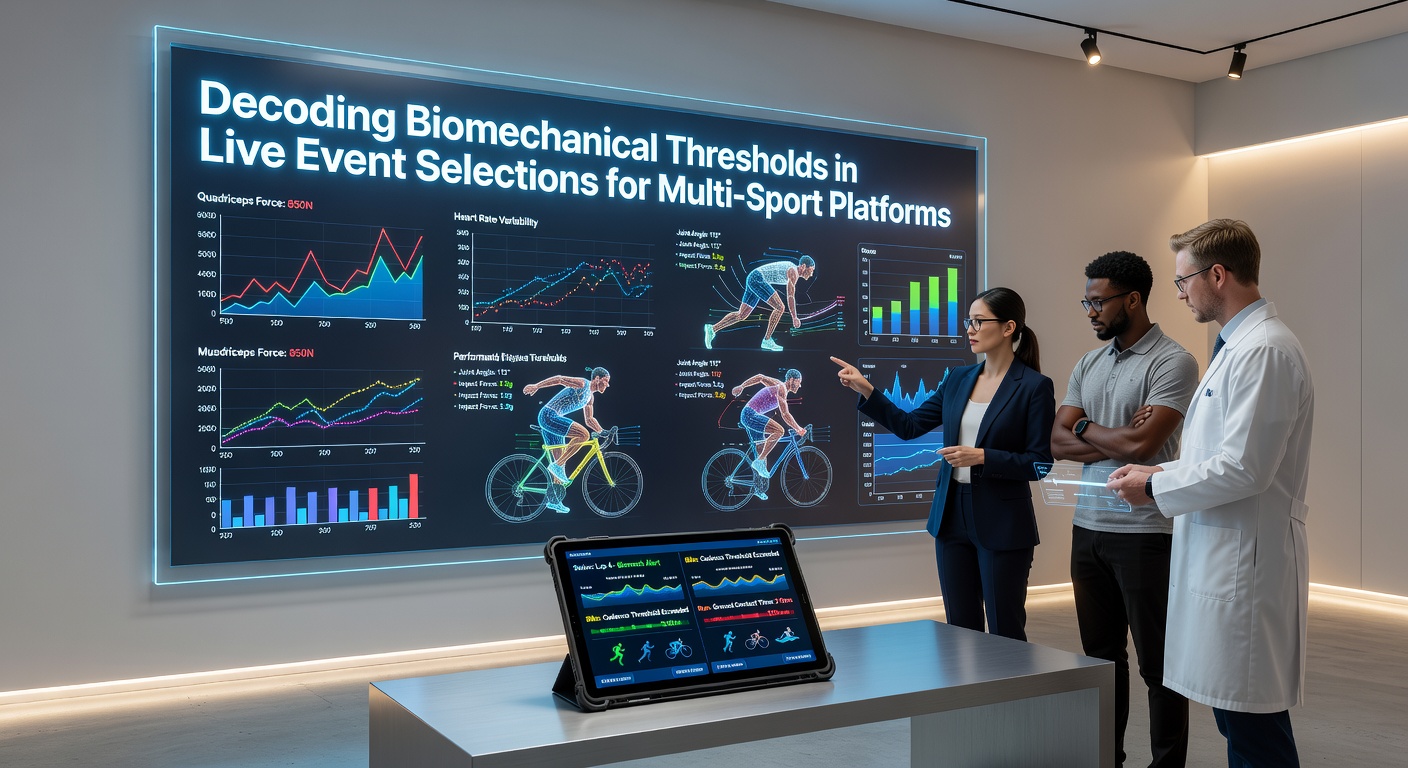
Biomechanical thresholds represent specific points in an athlete's movement patterns where performance metrics such as joint torque, ground reaction forces, and angular velocities reach critical values that influence outcomes in live competitions, and multi-sport platforms integrate these data points to refine event selections across disciplines including track events, team ball sports, and combat disciplines. Researchers at institutions focused on applied kinesiology have documented how these thresholds emerge from real-time sensor inputs collected during matches and races, allowing platforms to adjust live odds adn selection parameters based on observable physical limits rather than static historical averages.
Understanding Core Biomechanical Metrics in Competitive Settings
Data collected from accelerometers and force plates shows that runners in endurance circuits often hit stride length thresholds around 2.4 meters per step before fatigue indicators spike, while basketball players exhibit elbow joint extension velocities exceeding 1,200 degrees per second during peak shooting sequences. Platforms handling selections for multiple sports combine these measurements with contextual variables like match duration and environmental conditions, creating layered models that update continuously as events progress. Observers note that May 2026 has seen expanded adoption of portable inertial measurement units in European and North American leagues, which feed directly into selection algorithms used by operators managing cross-sport interfaces.
Integration Across Different Athletic Disciplines
Multi-sport platforms process biomechanical data differently depending on the event type, since a swimmer's stroke rate threshold differs markedly from a cyclist's pedal cadence limit or a tennis player's serve toss height optimum. Studies conducted through collaborative networks involving Canadian sports institutes reveal that platforms achieve higher consistency when they calibrate thresholds separately for each sport yet apply unified machine learning layers to compare relative deviations across competitions. This approach enables selectors to identify when an athlete approaches a performance ceiling during live play, prompting adjustments to available options without relying solely on score differentials or time elapsed. One analysis of professional circuits demonstrated that incorporating shoulder rotation thresholds in overhead sports reduced variance in predictive selections by measurable margins compared to models using only traditional statistics.
Real-Time Data Processing and Platform Architecture
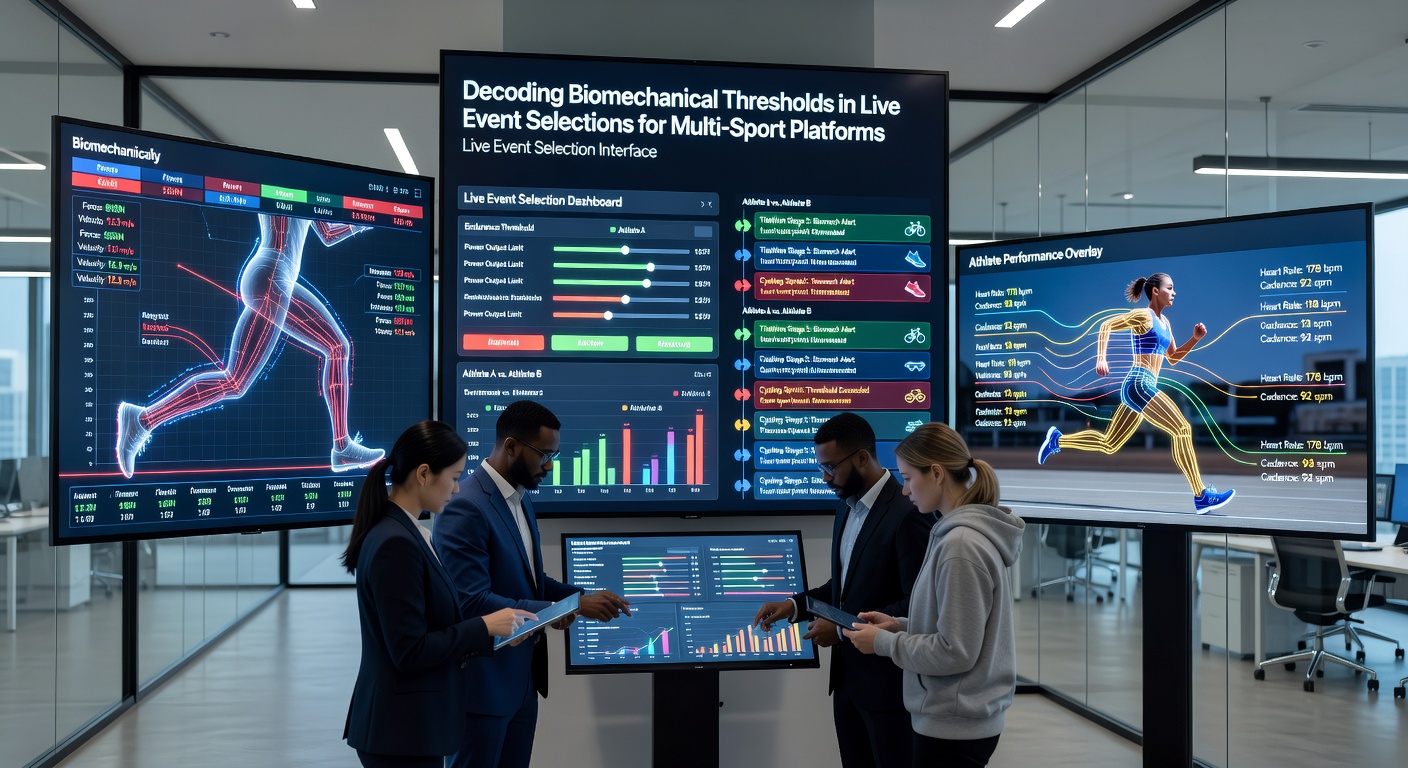
Live event selections rely on edge computing setups that process biomechanical streams within milliseconds, filtering raw signals from gyroscopes and electromyography patches to isolate meaningful threshold crossings. Platforms developed in Australia and the United States have adopted standardized protocols for data transmission that allow seamless switching between sports, such as transitioning from soccer field metrics to volleyball jump height calculations within the same user session. According to reports from the American College of Sports Medicine, these systems now incorporate calibration routines updated quarterly to account for equipment variations and athlete-specific baselines. The result appears in selection interfaces that display dynamic indicators, for instance highlighting when a pitcher's elbow valgus stress approaches documented injury-risk levels during baseball innings.
Challenges in Threshold Calibration and Validation
Validation of biomechanical thresholds requires repeated testing across seasons because individual adaptations occur through training cycles and recovery periods, which can shift the precise points where performance declines or stabilizes. Research teams working with data from multi-sport events in 2025 and early 2026 found that platforms using athlete-specific rather than population-average thresholds produced more stable selection outputs, particularly when events span different time zones and climate conditions. Organizations such as the Sports Science Association of Australia have contributed comparative datasets showing how hydration status and prior match load interact with force production thresholds in rugby and netball contexts. These interactions demand continuous model retraining to maintain accuracy as athletes move between events on the same platform.
Future Developments in Multi-Sport Selection Systems
Advances in sensor miniaturization and wireless connectivity point toward broader deployment of full-body kinematic tracking in additional leagues by late 2026, which would expand the range of detectable thresholds available for live selections. Current implementations already allow platforms to flag when a soccer player's sprint acceleration drops below established norms mid-match or when a golfer's club-head speed plateaus during tournament rounds. Experts tracking these trends emphasize that successful integration depends on maintaining data privacy standards while delivering actionable insights to users navigating selections across diverse athletic formats. Continued refinement of threshold definitions through longitudinal studies should support more precise adjustments as new events enter the multi-sport ecosystem.
Conclusion
Biomechanical thresholds provide measurable anchors that multi-sport platforms use to enhance live event selections by grounding decisions in physical performance data collected across varied disciplines. As sensor technology and analytical frameworks mature through 2026, the capacity to decode these limits in real time continues to shape how selections are presented and updated during ongoing competitions.