BetMGM Trims 2026 Revenue Forecast After Q1 Hurdles in U.S. Betting Landscape
Logan Schmitt · Apr 15, 2026

BetMGM Trims 2026 Revenue Forecast After Q1 Hurdles in U.S. Betting Landscape
Q1 Results Reveal Mixed Bag for BetMGM
BetMGM, the joint venture between Entain and MGM Resorts, kicked off 2026 with a quarterly performance that showed growth yet underscored mounting pressures; net revenue climbed 6% to $696 million in the first quarter, but challenges from fierce U.S. market competition, bettor-friendly outcomes, and ramped-up promotions led to a downward revision in full-year expectations. Figures from the company's report highlight how online casino revenue surged 9% to $481 million, while sports betting revenue edged up just 4% to $203 million, reflecting a tougher environment for sports wagering amid high-profile events that favored players. Active user numbers dipped, prompting observers to note a strategic pivot toward more predictable iGaming channels where marketing dollars stretch further.
What's interesting here is the resilience in certain pockets; premium segments held strong, as CEO Adam Greenblatt pointed out during the earnings call, even as overall user engagement softened. Data indicates that promotional spending intensified to counter rivals like DraftKings and FanDuel, who dominate the sports betting space, yet those efforts yielded mixed results with hold percentages slipping lower than anticipated.
Forecast Adjustment Signals Cautious Outlook
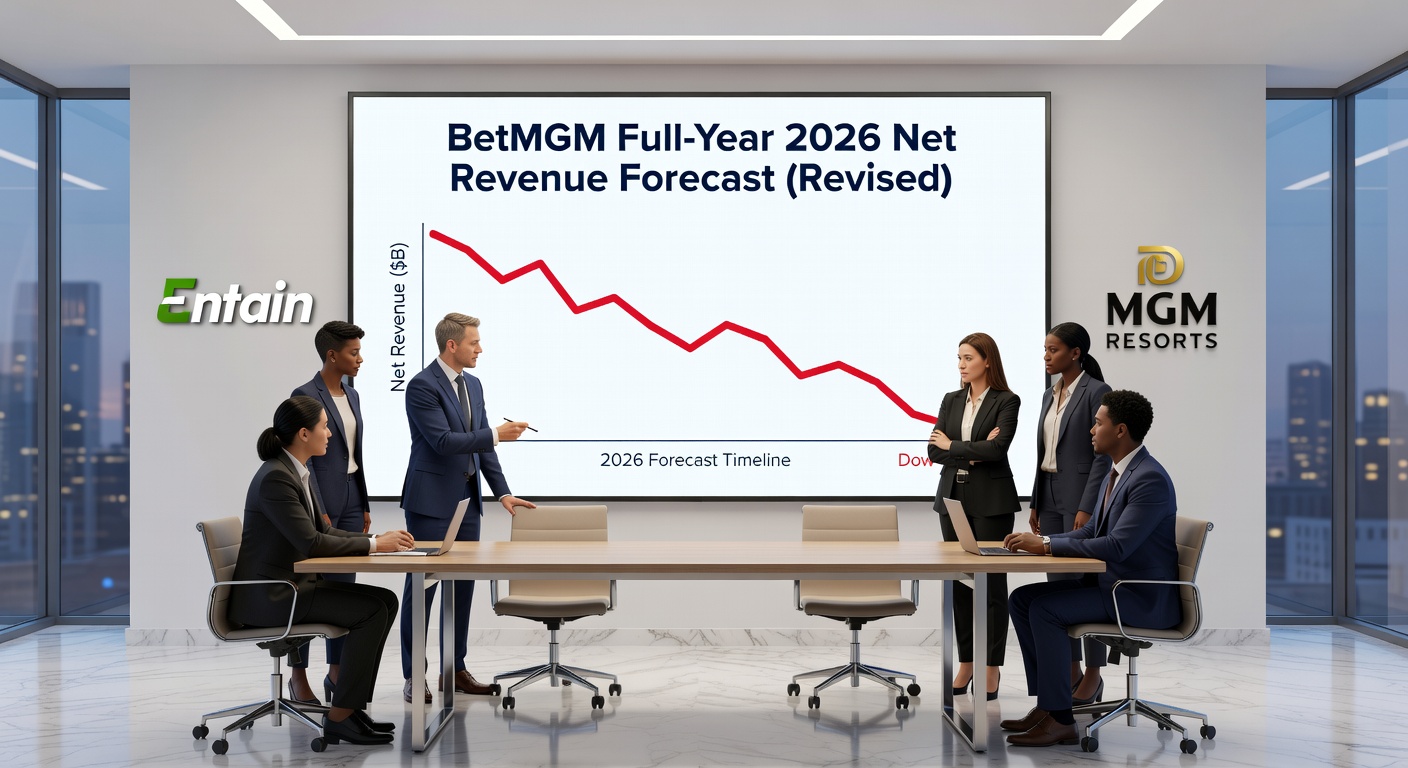
The company adjusted its 2026 net revenue guidance to $2.9 billion to $3.1 billion, down from the prior $3.1 billion to $3.2 billion range announced earlier; this tweak, revealed in mid-April 2026, comes as executives digest a Q1 marked by softer-than-expected sports betting margins. Reports detail how bettor-friendly results—think parlays hitting more often than usual during March Madness and early MLB slates—eroded profitability, a pattern experts have seen before in volatile sports seasons. That said, adjusted EBITDA guidance remains steady at $300 million to $350 million, suggesting confidence in cost controls and operational efficiencies even as top-line growth tempers.
Take one analyst who crunched the numbers: they observed that the narrower forecast range reflects a more conservative stance, narrowing from $100 million wide to $200 million previously, which hints at better visibility despite headwinds. And while revenue grew year-over-year, the pace slowed from prior quarters, where double-digit gains were more common; now, single-digit increases dominate the narrative as competition heats up across 30+ states with legal sports betting.
Breaking Down Revenue Streams: iGaming Shines, Sports Stumbles
Online casino operations stole the show with that 9% jump to $481 million, fueled by popular slots and table games that draw consistent play; sports betting, however, lagged at 4% growth to $203 million, hampered by promotional overlays and outcomes where favorites covered spreads less reliably. Declines in active users across both verticals raised eyebrows, leading BetMGM to reallocate marketing budgets toward iGaming, where customer lifetime value proves higher and acquisition costs lower over time.
Here's where it gets interesting: Greenblatt emphasized during the April 2026 earnings discussion how premium iGaming players—those wagering bigger on blackjack or roulette—delivered outsized contributions, offsetting sports betting woes; this shift aligns with broader industry trends, where operators lean into casino stability amid sports' unpredictability. Figures reveal promotional expenses rose sharply, eating into margins, yet the company held the line on EBITDA by trimming elsewhere, like tech investments yielding quicker returns.
CEO Greenblatt Stresses Resilience Amid Shifts
Adam Greenblatt, steering the ship at BetMGM, painted a picture of endurance during the Q1 review; he noted how the business weathered competitive storms through strong premium performance, maintaining EBITDA targets without flinching. Reuters coverage captured his comments on U.S. market dynamics, where bettor-friendly holds—around 5-6% lower than historical norms—combined with aggressive rival promotions to squeeze results. But the reality is, Greenblatt underscored a focus on long-term user retention, dialing back sports acquisition spend in favor of iGaming loyalty programs that build stickier engagement.
Observers who've tracked BetMGM's trajectory point out this isn't uncharted territory; past quarters saw similar adjustments after Super Bowls or NBA Finals where variance swung wildly, yet the company rebounded by doubling down on data-driven personalization. Now, in April 2026, with NBA playoffs ramping up, executives watch closely, betting on refined models to stabilize holds around industry averages of 8-10% for sports.
Market Pressures and Strategic Responses
U.S. competition defines the backdrop, with over a dozen major operators vying for share in states like New Jersey, Pennsylvania, and Michigan; BetMGM's Q1 experience mirrors peers, as bettors shop lines more aggressively via apps, forcing promotions that dilute margins short-term. Active user declines—down perhaps 5-10% from peaks, per estimates—signal saturation in mature markets, pushing firms toward churn reduction via VIP perks and cross-sells between sports and casino.
So, the pivot to iGaming marketing makes sense; it's not rocket science when casino revenue boasts higher predictability, with RTPs locked in versus sports' outcome swings. One case from last year involved a rival operator that slashed sports bonuses by 20%, boosting EBITDA 15% quarter-over-quarter; BetMGM appears to follow suit, reallocating to slots tournaments and live dealer exclusives that lure high-rollers. And while promotions ballooned in Q1, future quarters promise moderation, as AI tools sharpen targeting and cut waste.
That's where the rubber meets the road for 2026: can BetMGM hit the revised $2.9-3.1 billion net revenue while preserving EBITDA? Data from prior years suggests yes, given Entain's global scale and MGM's brick-and-mortar synergies feeding online traffic.
Implications for Investors and the Industry
Investors absorbed the forecast cut without panic, as shares held steady post-announcement in April 2026; the maintained EBITDA range reassures on profitability, even if revenue growth dips below 10% for the year. Experts note this positions BetMGM competitively, especially against pure-plays leaning harder into sports where variance bites deeper.
People in the space often discover that quarters like this test mettle; resilient operators emerge stronger, refining tech stacks for better parlay pricing or user segmentation. BetMGM's story fits that mold, with iGaming as the anchor amid sports turbulence, setting up potential upside if NBA and NFL seasons normalize holds.
Wrapping Up the BetMGM Update
In summary, BetMGM's Q1 navigated growth amid grit, trimming 2026 revenue views to $2.9-3.1 billion while holding EBITDA firm at $300-350 million; iGaming's 9% rise to $481 million outpaced sports' 4% to $203 million, active user dips spurred marketing tweaks, and Greenblatt's resilience talk charts a steady course. As April 2026 unfolds with playoffs in full swing, the company's adaptations could prove prescient, balancing competition's bite with casino steadiness in a market that's anything but predictable. The writing's on the wall for operators: diversify or face the variance.